ServiStar performed a targeted spot repair on a 4-by-6-inch sewer connection and installed a 30-foot cured-in-place pipe liner inside a deteriorating 6-inch clay sewer lateral near Los Angeles City Hall.
What Did This Sewer Repair Project Involve?
ServiStar completed two distinct scopes of work on this job: a spot repair on a 4-by-6-inch sewer connection and the installation of a 30-foot cured-in-place pipe (CIPP) liner inside a 6-inch clay sewer lateral near Los Angeles City Hall. The customer needed a permanent fix for a sewer line that had reached the end of its service life, without the cost and disruption of digging up the entire run.
Clay sewer pipe was the standard material for lateral construction through most of the 20th century, and older neighborhoods across Los Angeles still have hundreds of miles of it running beneath streets, driveways, and front yards. Clay becomes brittle over decades of soil movement and root intrusion, and cracks or offset joints are the predictable result. When a camera inspection confirms that kind of structural damage, a CIPP liner is often the most practical answer: the existing pipe becomes a form, and a resin-saturated liner is inverted or pulled into place and then cured to create a continuous, joint-free pipe inside the old one.
What Did the Excavation Reveal?
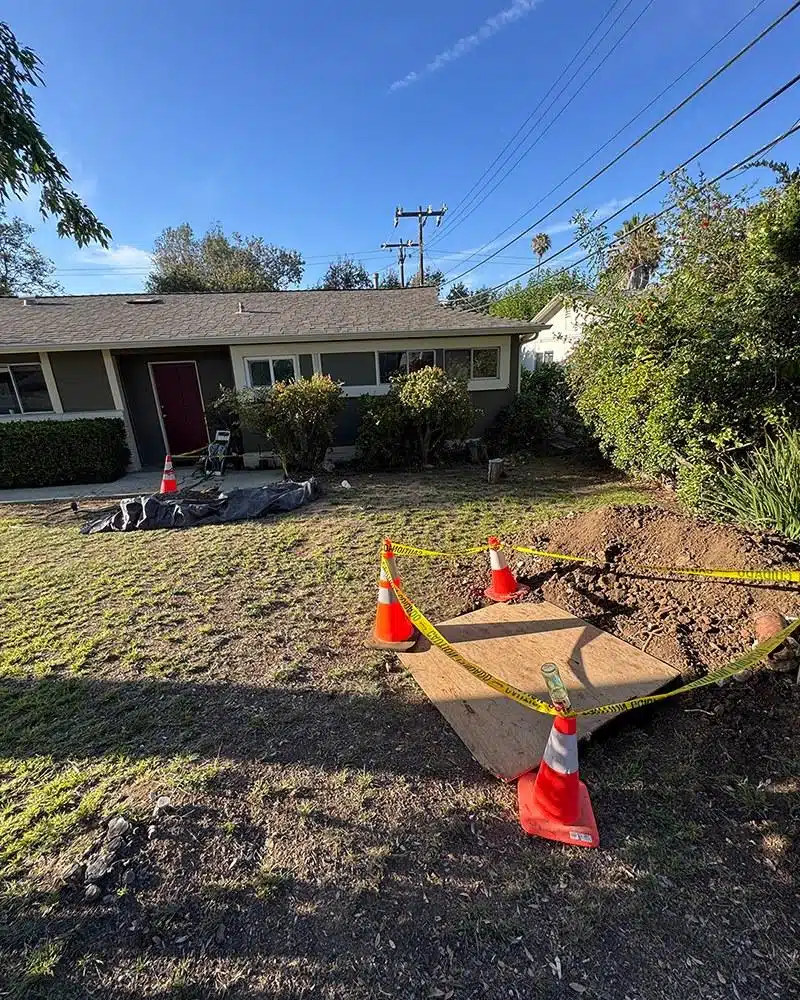
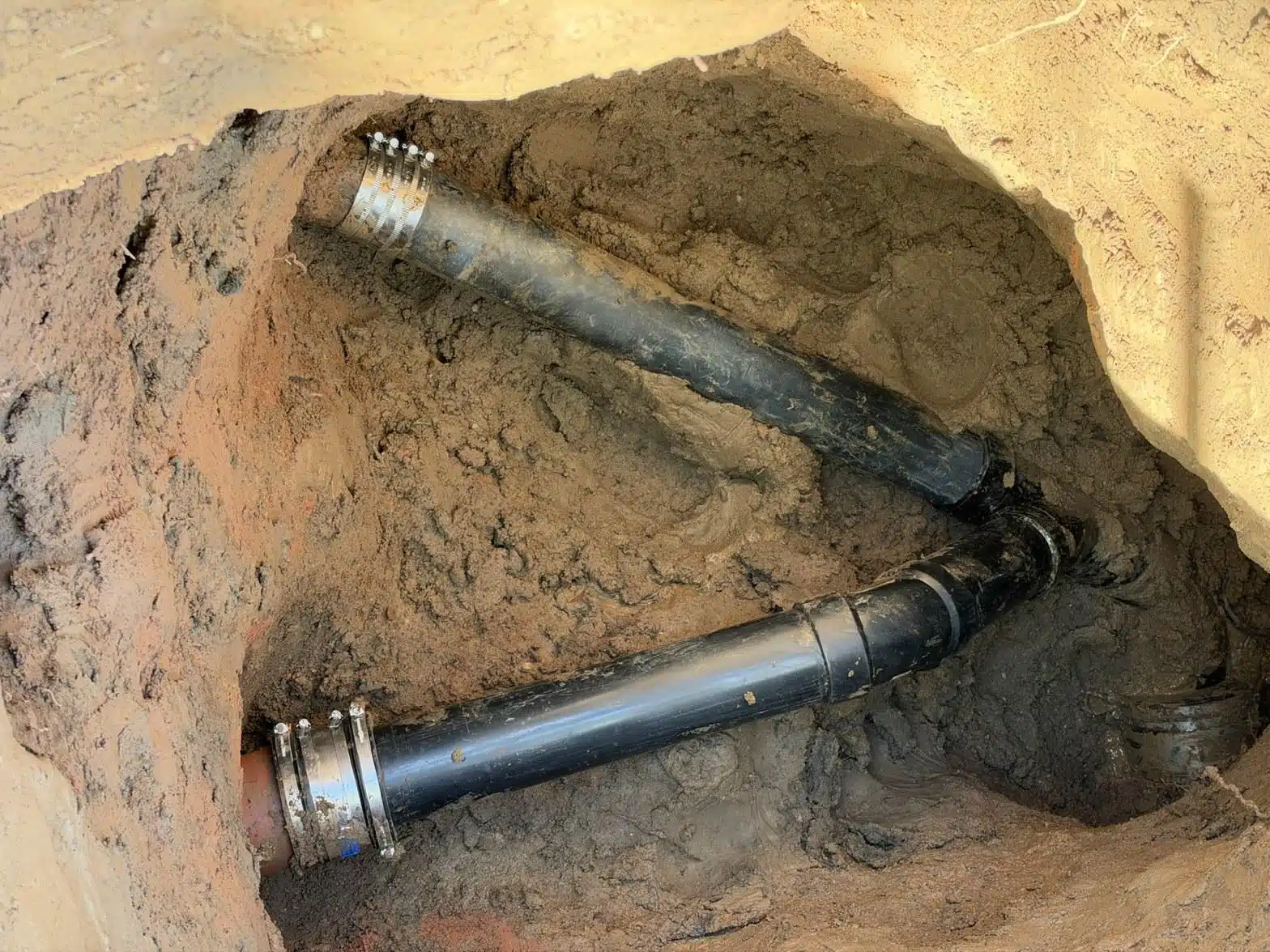
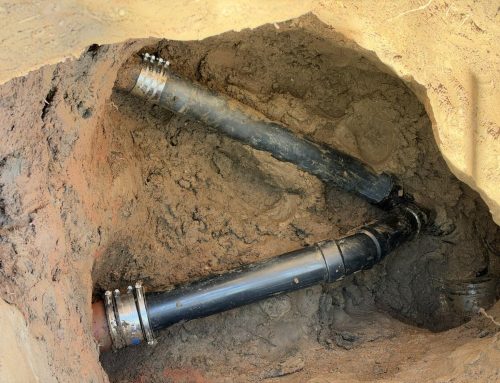
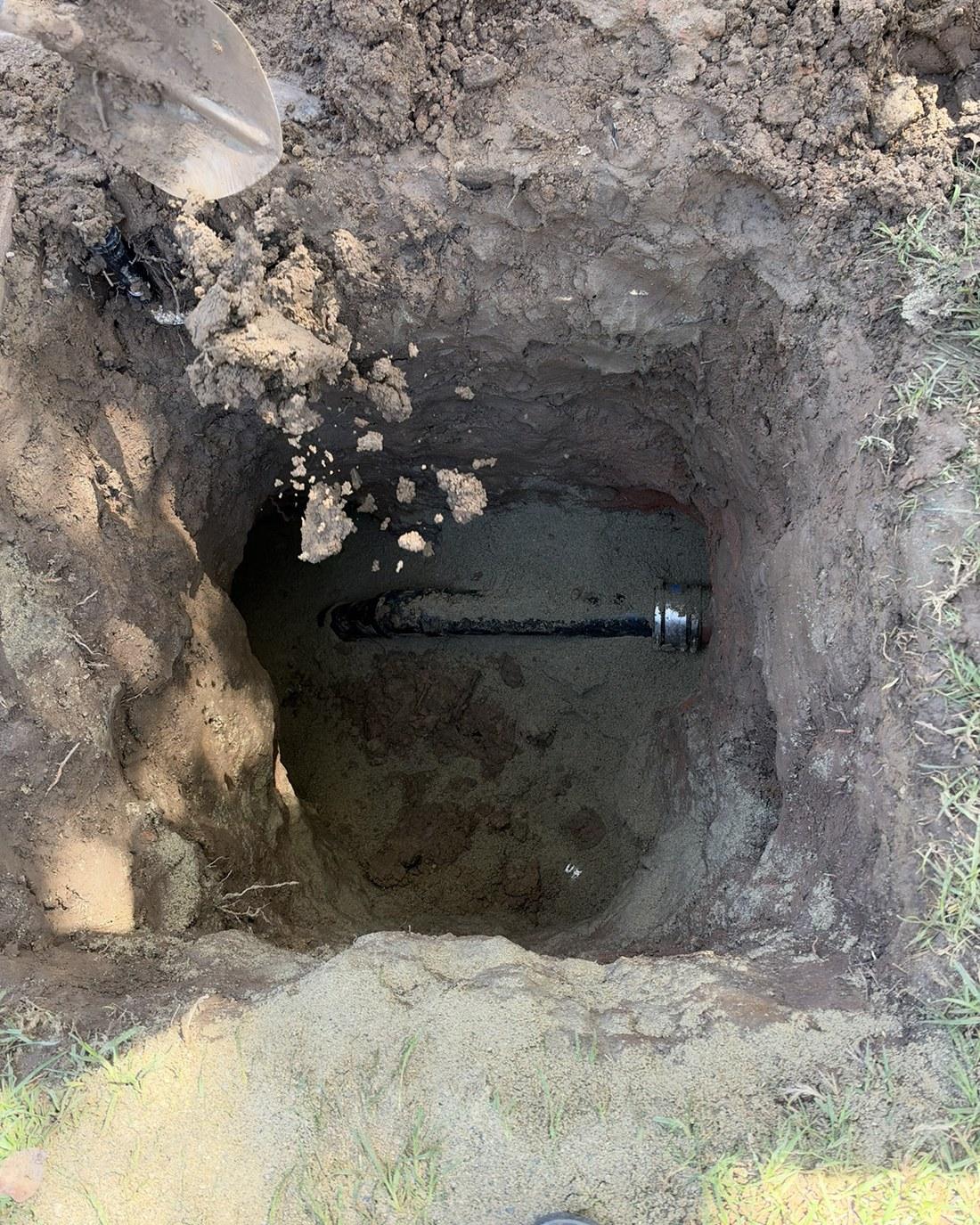
Opening the ground exposed a buried black pipe sitting in sandy soil roughly 3 to 4 feet below grade, with clear evidence of joint deterioration at the connection point. The pit walls showed the layered, sandy soil profile that is common throughout the Los Angeles basin, a soil type that offers relatively little lateral support to aging clay pipe and can accelerate joint separation over time.
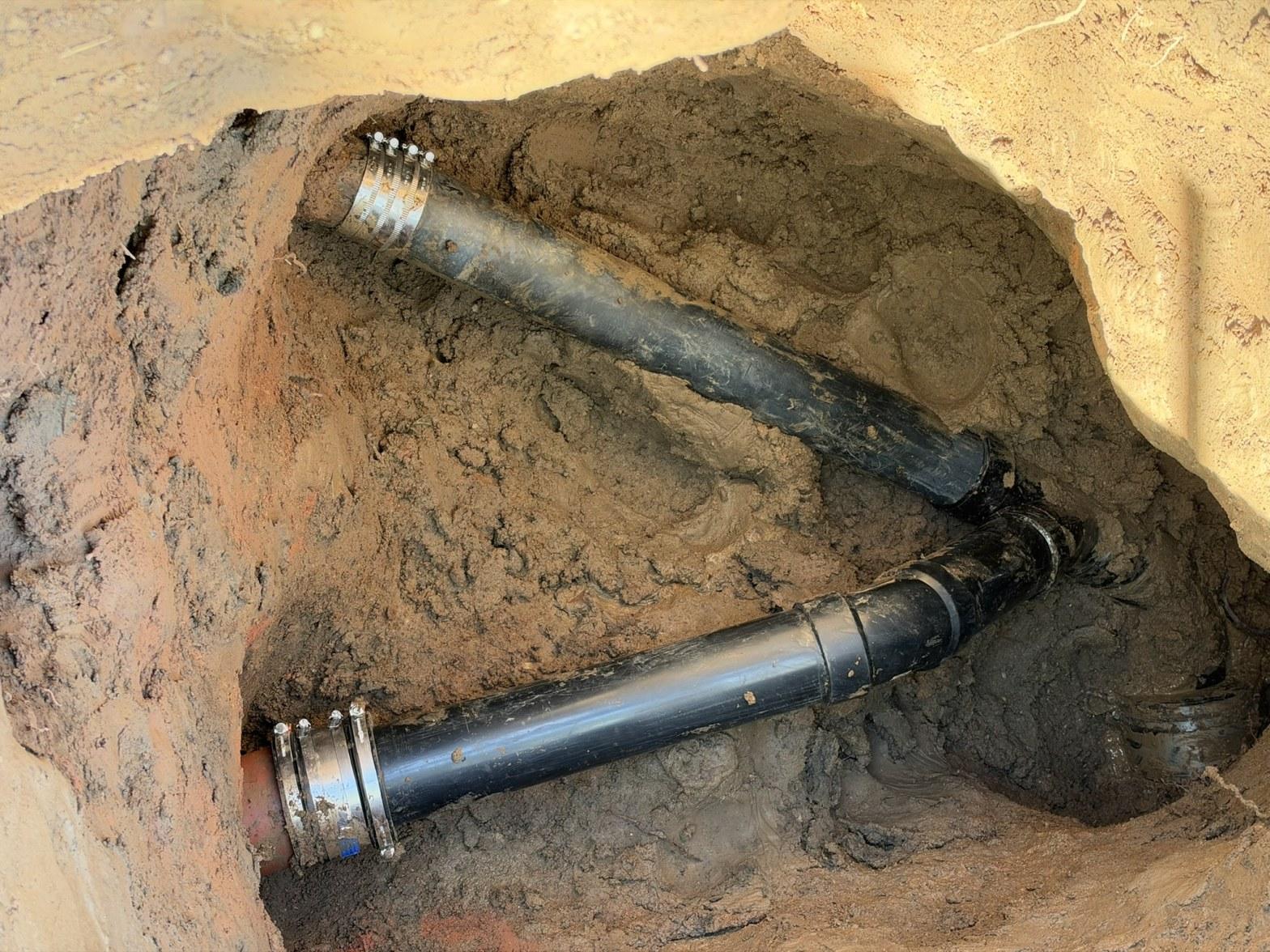
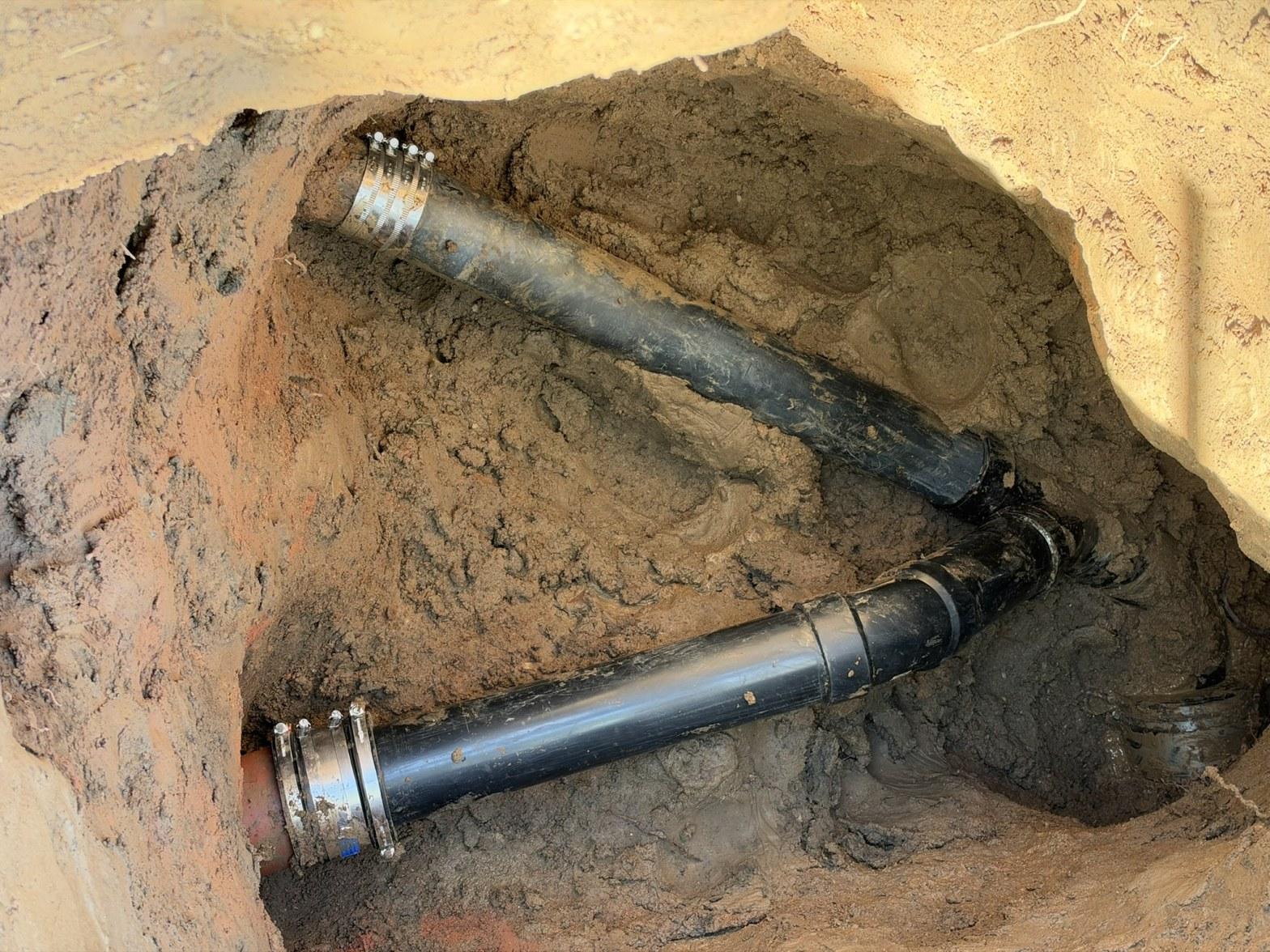
The spot that needed direct repair was the 4-by-6-inch transition connection, the point where a 4-inch branch meets the 6-inch main lateral. Offset or cracked connections at reduction fittings are a frequent failure point in older clay systems, because the joint is subject to both the movement of the smaller branch and the loading of the larger run. Leaving that joint unrepaired before installing the liner would have created a weak point that the liner alone could not bridge reliably, so the spot repair came first.
Our crew excavated a cleanly squared pit to expose only the section that needed direct access, keeping the footprint as small as possible to limit disruption to the lawn and hardscape surrounding the property. Access to the pipe at that depth required careful shoring practice to maintain safe working conditions in the sandy soil.
How Was the Spot Repair and Liner Installed?
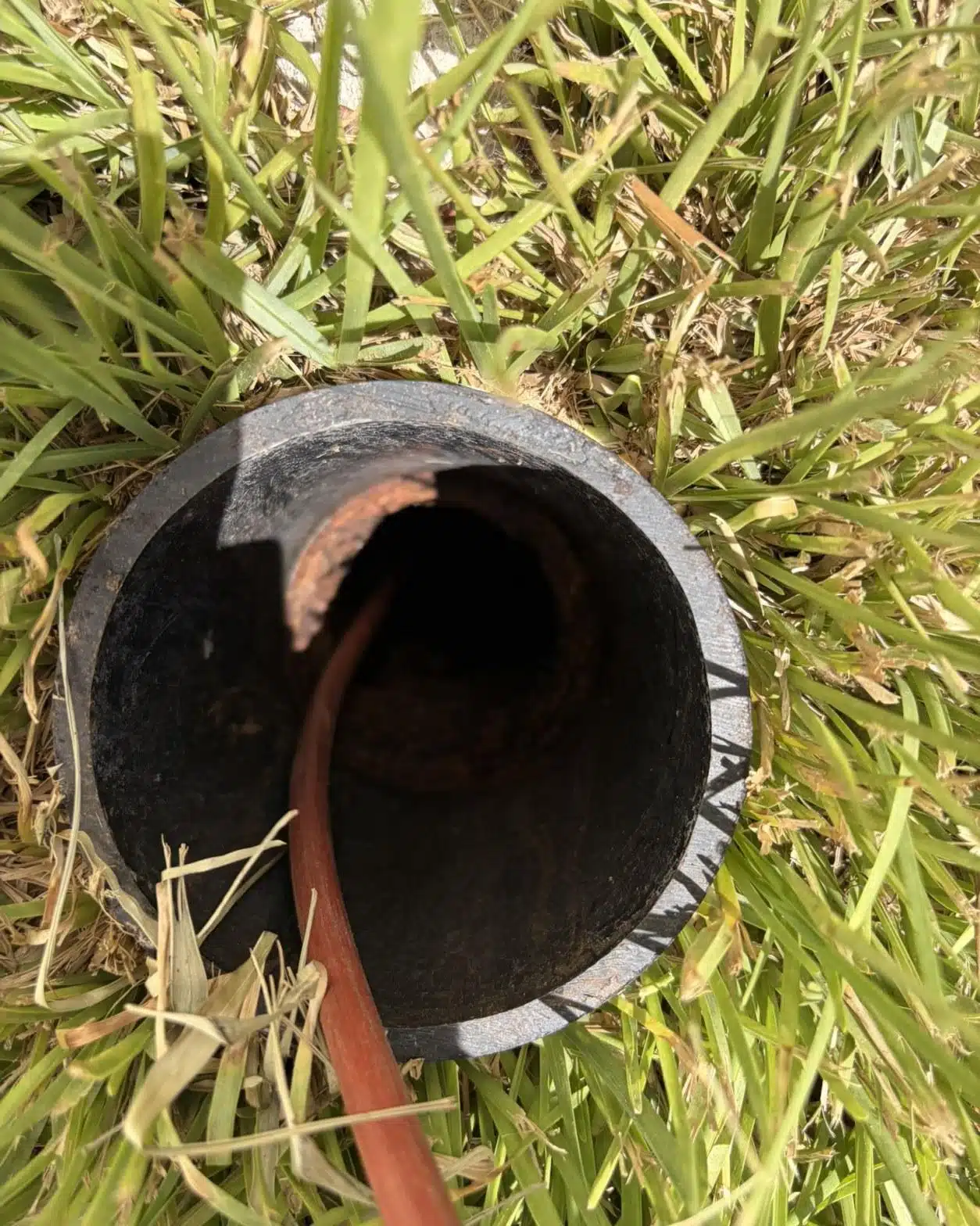
The spot repair used short ABS pipe couplings secured with stainless steel band clamps, a method suited to tight excavation access where full pipe replacement on either side of the connection is not practical. Once the failed connection was stabilized and the pipe interior was cleaned and inspected, the 30-foot CIPP liner could be introduced.
CIPP lining has become the preferred trenchless rehabilitation method for structurally deficient sewer laterals across municipalities nationwide, and Los Angeles has relied on it heavily since the city accelerated its sewer rehabilitation program in the early 2000s. For a 6-inch clay lateral, a properly installed liner adds an effective service life of 50 years or more according to published liner manufacturer data and independent testing by the Water Research Foundation.
Our technicians measured the lateral at 30 linear feet from the repaired connection point to the downstream terminus, which determined the liner cut length. The liner was sized to match the 6-inch internal diameter of the clay host pipe. After curing, the finished liner produces a smooth, continuous interior surface with no joints for roots to exploit and no clay seams to crack.
The gallery photos show the excavated pit at two stages: the initial exposure of the deteriorated pipe, and the repaired connection with the new coupling sleeves and clamps already seated. The final excavation image shows the dual-pipe assembly inside the pit, confirming the coupling alignment before backfill.
Why Choose CIPP Over Full Replacement on This Lateral?
CIPP lining typically costs 30 to 50 percent less than open-cut full replacement on a comparable lateral length, and it eliminates the concrete, asphalt, and landscaping restoration that follows a full trench dig. On a property near Los Angeles City Hall, where sidewalks, brick paver aprons, and established lawn all border the sewer corridor, avoiding a full-trench approach protected surfaces that would have been expensive to restore.
California’s State Water Resources Control Board has increasingly prioritized lateral rehabilitation over replacement as part of its sanitary sewer overflow reduction framework, recognizing that trenchless methods reduce collateral infrastructure damage and shorten road closure windows. As of 2024, Los Angeles Municipal Code requirements for sewer lateral compliance at point of sale have pushed more property owners to address deteriorating clay laterals before they become code violations or cause backups.
The spot repair addressed the immediate structural failure at the 4-by-6-inch connection, while the 30-foot liner secured the remaining run. Together, the two scopes delivered a complete rehabilitation of the lateral in a single mobilization. Licensed by the California Contractors State License Board (CSLB), ServiStar carries the credentials required to perform this class of sewer work on both residential and municipal properties in Los Angeles County.
Schedule Your Sewer Line Evaluation
If your property has an older clay lateral or you have received notice of a sewer compliance requirement, get a camera inspection before the problem escalates. Call ServiStar to book your evaluation and receive a written scope and cost estimate before any work begins.
Gallery
Frequently Asked Questions
How long does a CIPP liner last inside a clay sewer pipe?
A properly installed CIPP liner in a 6-inch clay host pipe is rated for a service life of 50 years or more, based on published manufacturer testing and Water Research Foundation independent studies. The liner creates a smooth, joint-free interior surface that resists root intrusion and corrosion for decades. Actual longevity depends on soil conditions, flow volume, and whether the host pipe was properly cleaned and inspected before installation.
What is a sewer spot repair and when do you need one?
A sewer spot repair is a localized fix at a single damaged section or connection point, rather than replacing the entire pipe run. It is appropriate when a camera inspection finds one cracked joint, an offset coupling, or a failing transition fitting while the rest of the lateral is structurally sound. On this job, the 4-by-6-inch connection needed a spot repair before the 30-foot CIPP liner could be installed over the full run.
How deep do you have to dig for a sewer spot repair?
Depth depends on where the sewer lateral sits under the property, but Los Angeles laterals commonly run 3 to 6 feet below grade. On this project, the excavated pit exposed the pipe at roughly 3 to 4 feet of depth, which is typical for front-yard laterals in older Los Angeles neighborhoods. A cleanly squared pit just large enough to access the damaged section keeps the excavation footprint small and limits surface disruption.
Is CIPP lining approved for city sewer laterals in Los Angeles?
Yes. CIPP lining is an accepted rehabilitation method under Los Angeles Municipal Code requirements and has been used extensively by the city's Bureau of Sanitation on both public mains and private laterals. The contractor performing the work must hold the appropriate California contractor's license, which ServiStar does as a company licensed by the California Contractors State License Board (CSLB).
How much cheaper is CIPP lining compared to full sewer line replacement?
CIPP lining typically costs 30 to 50 percent less than open-cut full replacement on a comparable lateral, primarily because it eliminates the cost of excavating the full trench and restoring the concrete, asphalt, or hardscape above it. The savings are especially significant on properties where paved driveways, brick aprons, or established landscaping would need to be removed and replaced. The exact difference depends on lateral length, depth, and site access.
Can tree roots get into a CIPP-lined sewer pipe?
No. Once a CIPP liner cures inside the host pipe, it creates a continuous, seamless interior with no joints or cracks for roots to penetrate. This is one of the primary reasons property owners choose lining over repair couplings alone, because couplings still leave mechanical joints that roots can eventually infiltrate. A 30-foot liner, as installed on this project, eliminates every joint along that entire run.