A residential sewer lateral inspection using a push camera revealed root intrusion at 16 feet 10 inches and a separate debris blockage at 30 feet 5 inches inside an aging cast iron pipe.
What This Inspection Was About
A homeowner in the Highland Park area called ServiStar after noticing slow drains that weren’t responding to standard clearing. The goal was simple: get a camera into the sewer lateral and find out exactly what was happening before committing to any repair work.
That approach is the right one. Sewer problems that look identical from the surface, slow drains, gurgling, occasional backups, can have completely different causes underground. Root intrusion, debris accumulation, pipe offset, and full collapse each call for a different fix. Running a camera first prevents homeowners from paying for hydro-jetting when what they actually need is pipe lining, or paying for excavation when a simple jetting pass would restore full flow.
The lateral we inspected on April 30, 2025 is cast iron, which places it in a category of pipe that was standard in residential construction through roughly the 1970s. U.S. Census housing data shows that a significant share of single-family homes in older California neighborhoods were built before 1980, meaning cast iron laterals are still extremely common in the region. Cast iron can last 50 to 100 years under good conditions, but it is vulnerable to internal rust scaling, joint separation over time, and root intrusion at any fitting or joint gap.
With the camera in hand and the access point located in the yard, the technician fed the line and began documenting conditions at every foot.
What Did the Camera Find at 30 Feet?

At 30 feet 5 inches into the lateral, the camera encountered a solid blockage that was restricting nearly the entire pipe bore. The monitor image shows the pipe cross-section reduced to a narrow opening, with buildup pressing in from the lower left side of the pipe wall. This type of obstruction, at that depth, sits well past the house trap and into the section of lateral that runs beneath the yard toward the municipal connection.
Blockages at this depth are important to locate precisely because they sit outside the foundation but before the property line connection. That placement keeps the repair entirely on the homeowner’s side, so the city is not involved in the fix. Knowing the exact footage, in this case, 30 feet 5 inches, gives any repair crew a reliable dig target or a confirmed starting depth for a pipe lining setup. Without camera footage, a crew would be estimating.
The nature of the obstruction visible at 30 feet appears to be compacted debris rather than root mass. The edges are smooth and dense rather than fibrous, which changes the clearing strategy. Hydro-jetting at the correct pressure can often break up debris blockages of this type without excavation, though the condition of the surrounding pipe wall has to be evaluated before applying high-pressure water to aged cast iron.
Our technicians have found, across inspection calls on homes of this era, that debris blockages in cast iron lines almost always occur at or just downstream of a joint, where the pipe interior has developed a rust ledge that catches solids passing through. That pattern held here as well, with the obstruction positioned near a visible joint transition on the camera feed.
What Did the Camera Find at 16 Feet?

Root intrusion was documented at 16 feet 10 inches, with fine fibrous root strands visible filling a portion of the pipe cross-section. On the monitor it read as a dense cluster of white hair-like roots emerging from a joint seam and spreading across the interior of the pipe.
Root intrusion at this depth, roughly 16 to 17 feet from the camera entry point, places the problem beneath the front yard or the area immediately adjacent to the house foundation, depending on where the cleanout access is located. Tree roots are drawn to sewer pipes because the pipe carries warm, nutrient-rich water. Even a hairline crack or a slightly separated bell-and-spigot joint is enough for fine feeder roots to enter. Once inside, they expand with the tree’s growth and can eventually fill the entire pipe bore.
The debris blockage visible at 15 feet 9 inches in the second camera image reinforces the picture: roots collect passing solids, and the combination builds into a compacted mass faster than either problem would develop alone. The camera captured both conditions within about 1 foot of each other in the pipe, confirming that the two issues are interacting.
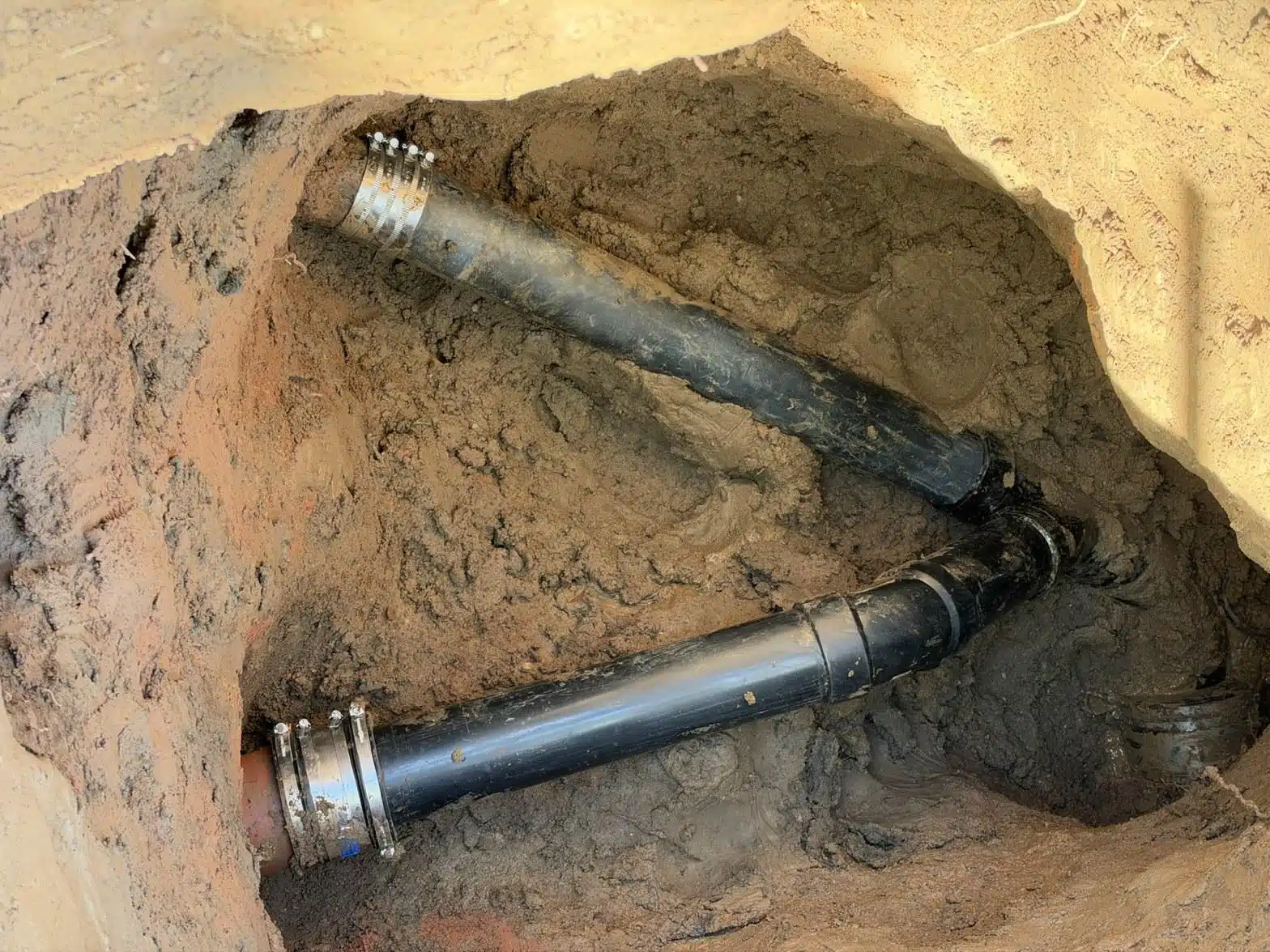
For root intrusion in cast iron pipe, the standard repair options are mechanical root cutting followed by hydro-jetting to flush debris, pipe lining (CIPP) to seal the joint and prevent re-entry, or excavation and section replacement if the pipe wall itself has deteriorated. The right choice depends on the pipe’s structural condition, which a camera inspection alone can indicate but a full condition assessment can confirm more precisely.
What Does the Cast Iron Pipe Condition Tell Us?
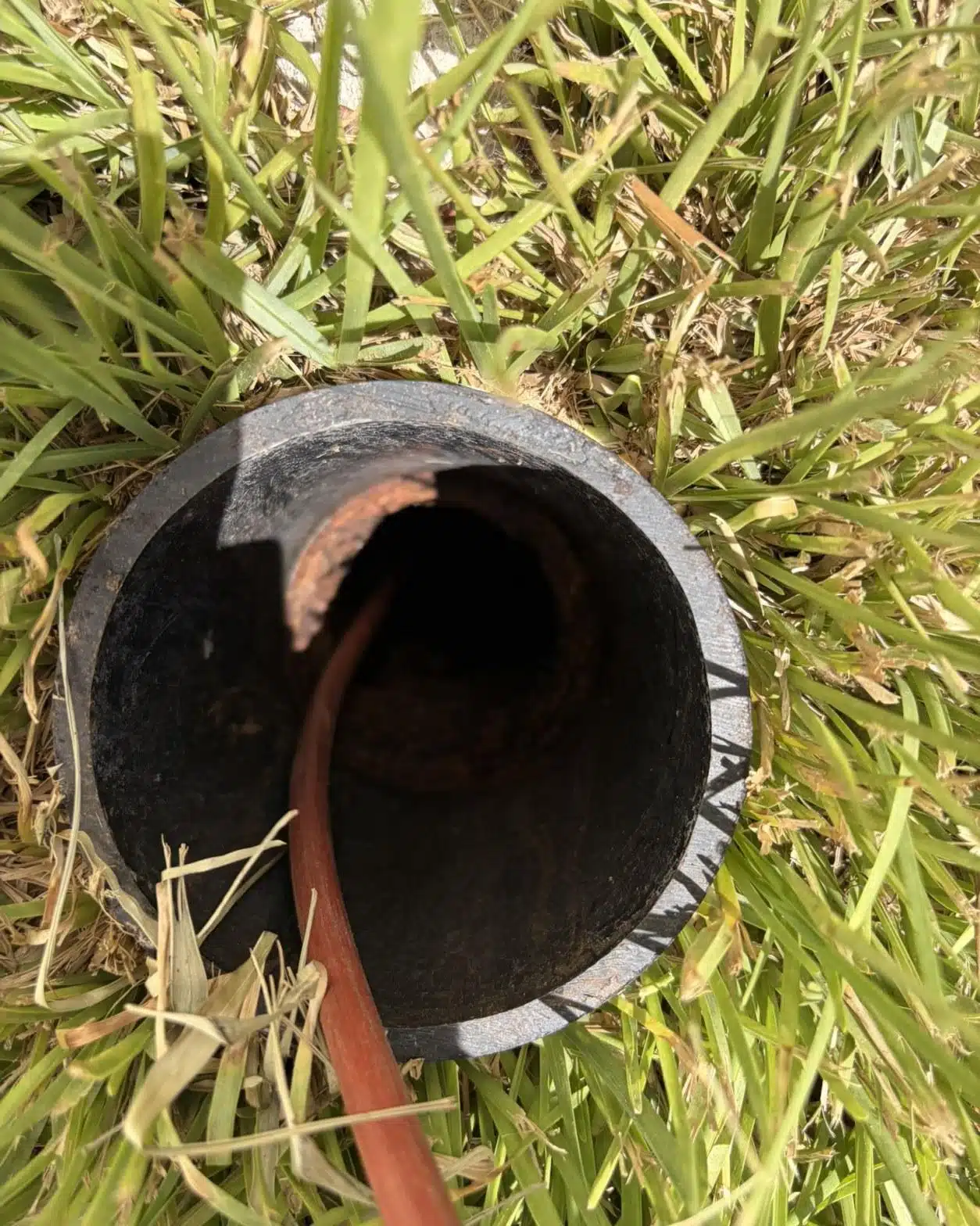
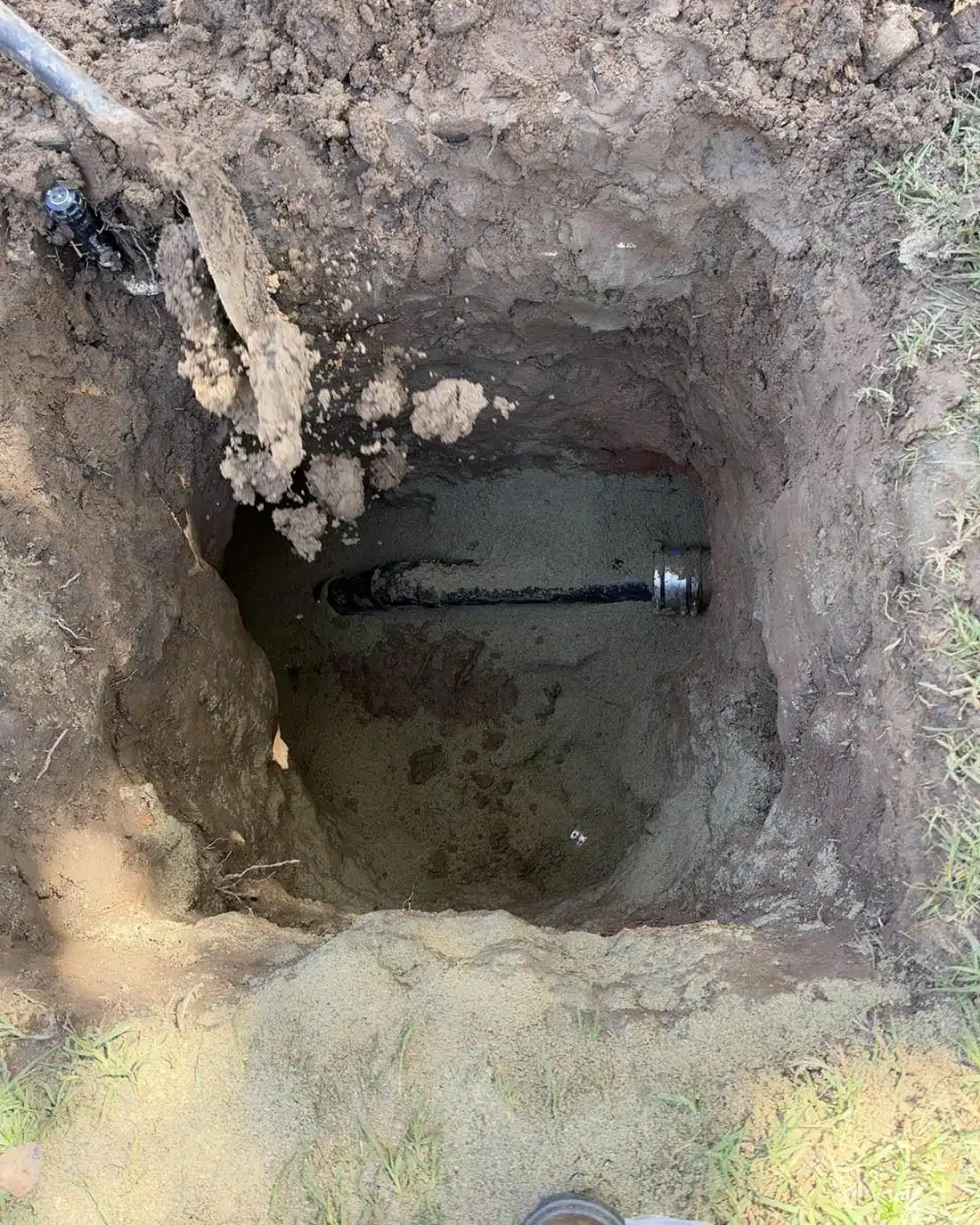
The access point photo shows a cast iron cleanout pipe with visible surface rust along the interior rim, a normal finding on pipe of this age but one that factors into the repair plan.
Cast iron develops a surface oxidation layer as it ages. Moderate rust on the rim of a cleanout does not automatically mean the pipe is failing, but it does indicate the pipe has been in service long enough that internal scaling is likely present throughout the run. Internal scale narrows the effective diameter of the pipe and creates the rough surfaces where debris and root material can anchor more easily.
A pipe showing this level of exterior oxidation at its exposed end, combined with two documented blockages within the first 31 feet of run, is a strong indicator that a camera inspection alone is not the end of the story. The homeowner now has documented footage, footage timestamps, and precise footage measurements to take to any contractor or municipality for a repair conversation. That documentation has real value: it eliminates guesswork, speeds up permitting conversations, and gives a contractor a verified scope before a single shovel goes into the ground.
According to the California Contractors State License Board (CSLB), any contractor performing sewer repair or replacement work in California must hold the appropriate license classification. Homeowners should confirm license status before authorizing excavation or pipe lining work.
Old Lines, Full Picture

A camera inspection job also turns up the broader condition of a property’s underground infrastructure, and this inspection was no exception.
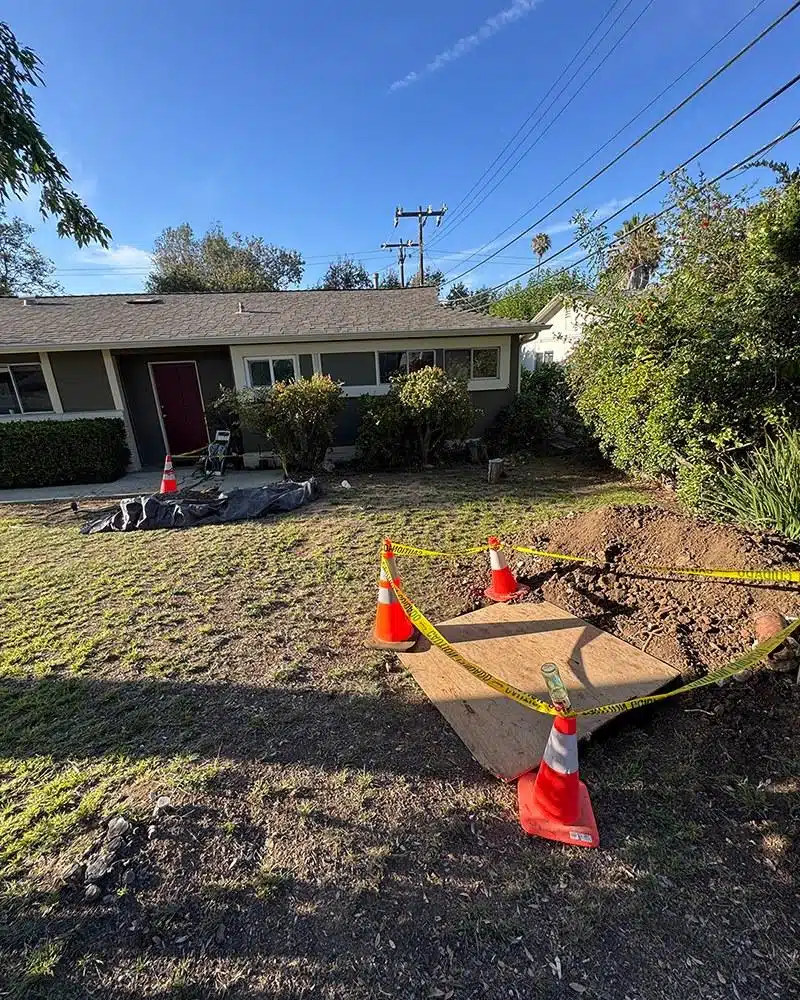
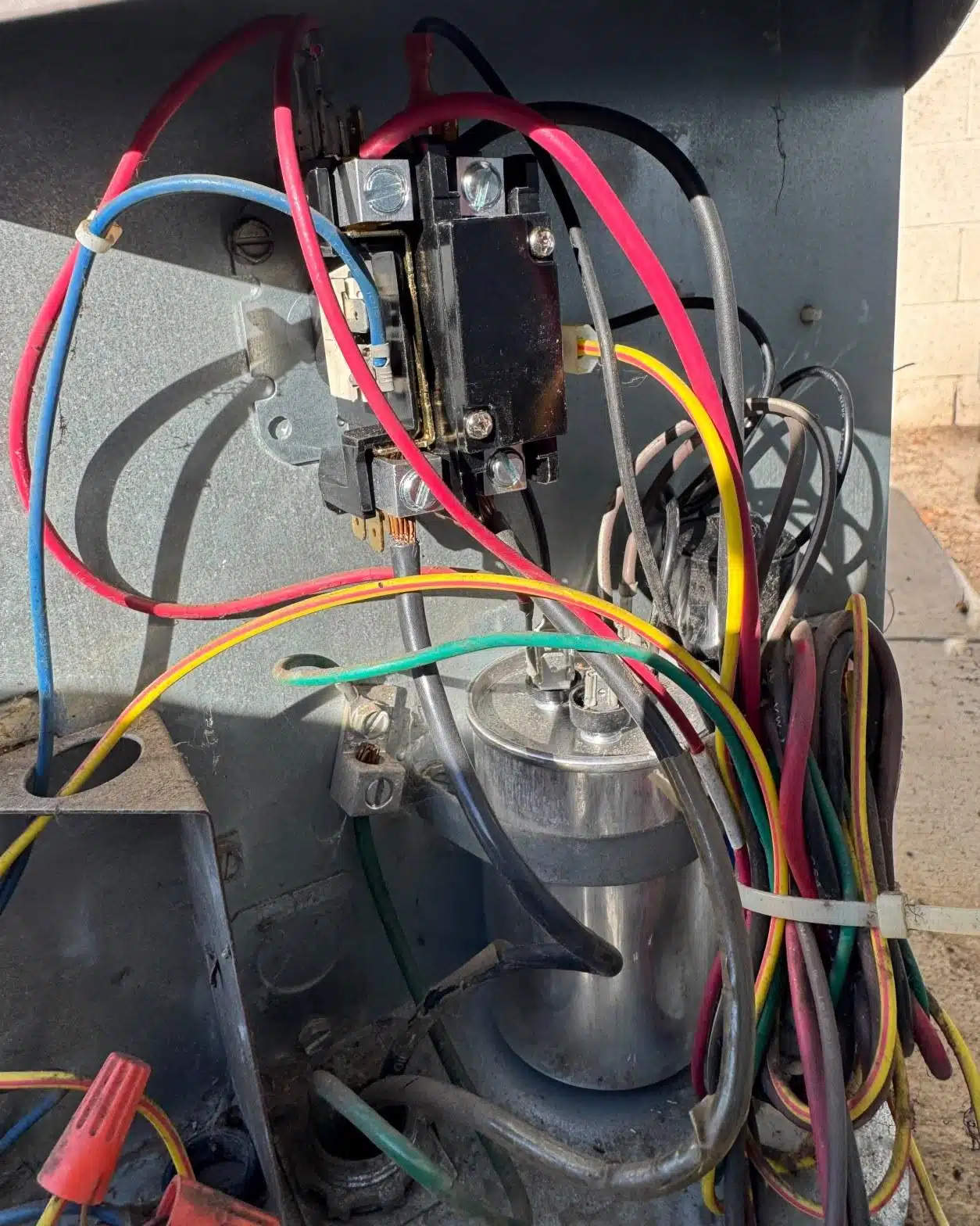
During the site visit, old HVAC lines and hoses were observed removed and staged in the backyard, indicating the property is in the middle of a broader systems update. That context matters for sewer work: when a home is already mid-renovation, it is often the right time to address underground plumbing issues before new landscaping, flatwork, or finished grades make access more difficult and expensive. Coordinating trades during an active project window can reduce total excavation costs significantly compared to returning to an already-finished yard.
ServiStar documented the full camera run with timestamped footage so the homeowner has a clear record of pipe conditions as of April 30, 2025. That baseline is useful not just for immediate repairs but for any future sale, insurance conversation, or permit application where proof of pipe condition is requested.
If your home has slow drains, recurring backups, or is simply older than 40 years and has never had a camera inspection, a video inspection of your lateral is the logical first step. It costs a fraction of exploratory excavation and gives you real information instead of guesses.
Call ServiStar to schedule your sewer camera inspection. We will document conditions at every foot of the run and walk you through the footage so you understand exactly what is in your line before any repair decision is made.
Frequently Asked Questions
How far into the pipe do sewer camera inspections typically reach?
A standard residential push-camera can reach 100 feet or more from the access point, though most residential laterals are fully documented within 50 to 75 feet. In this inspection, significant findings were documented at 16 feet 10 inches and 30 feet 5 inches, both within easy camera range.
What happens if the camera finds root intrusion in my sewer pipe?
Root intrusion can be addressed by mechanical cutting, hydro-jetting, or trenchless pipe lining depending on how severe the roots are and what condition the pipe wall is in. A camera inspection gives you the footage you need to choose the right method rather than guessing. Leaving roots untreated allows them to grow and collect debris until the pipe is fully blocked.
Is cast iron sewer pipe still okay to use, or does it need to be replaced?
Cast iron pipe can remain in service for 50 to 100 years under the right conditions, so age alone is not a reason to replace it. Surface rust on the exterior or interior rim is common and does not automatically mean failure. The decision to reline or replace depends on whether the pipe wall has cracked, collapsed, or developed joint separations, which a camera inspection can reveal.
Do I need a permit to repair or replace a sewer lateral in California?
Yes, most sewer lateral repairs and full replacements in California require a permit from the local building or public works department. Any contractor performing that work must be licensed by the California Contractors State License Board (CSLB). You can verify a contractor's license status at cslb.ca.gov before authorizing any dig.
How do I know if my slow drain is a sewer line problem and not just a clogged fixture drain?
If a single fixture drains slowly, the problem is usually in the fixture's drain or trap. If multiple fixtures throughout the house drain slowly at the same time, or if using one fixture causes backup in another, the issue is almost certainly in the main sewer lateral. A camera inspection confirms the cause and the location so you are not paying to clear a section that is not the real problem.
Is it worth getting a sewer camera inspection when buying an older home?
Yes, a pre-purchase sewer inspection is one of the most cost-effective inspections a buyer can request on a home built before 1980. Root intrusion, pipe offset, and debris blockages are common in aging laterals and rarely show symptoms until they cause a backup. Knowing the condition before closing gives buyers negotiating leverage and avoids an unpleasant surprise in the first year of ownership.