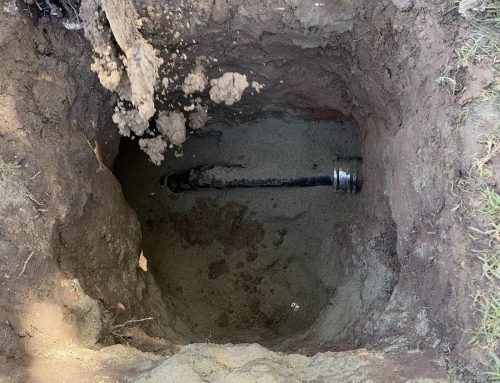
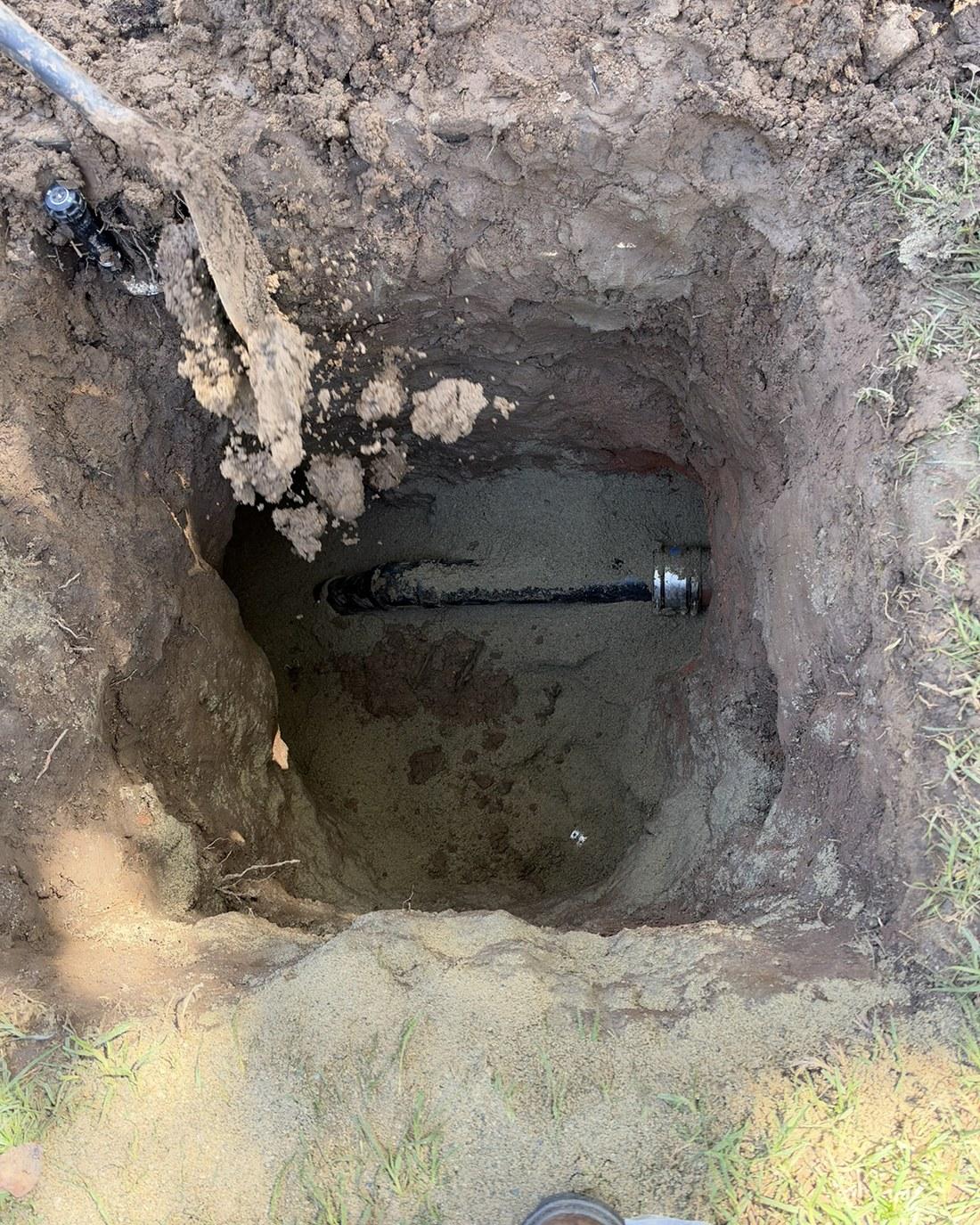
ServiStar replaced a deteriorated underground sewer lateral in Los Angeles, excavating to expose the old pipe, cutting in new PVC sections joined with stainless-steel band couplings, and backfilling the trench to restore the yard.
Sewer line problems rarely announce themselves until the damage is already serious. A homeowner in Los Angeles contacted ServiStar after noticing slow drains throughout the house and a persistent sewage odor near the front yard. A camera inspection had already confirmed what the symptoms suggested: the underground sewer lateral connecting the home to the city main was failing. The pipe had deteriorated to the point where no amount of cleaning would restore reliable flow. Full replacement was the only sound path forward.
What Did the Old Pipe Look Like Underground?
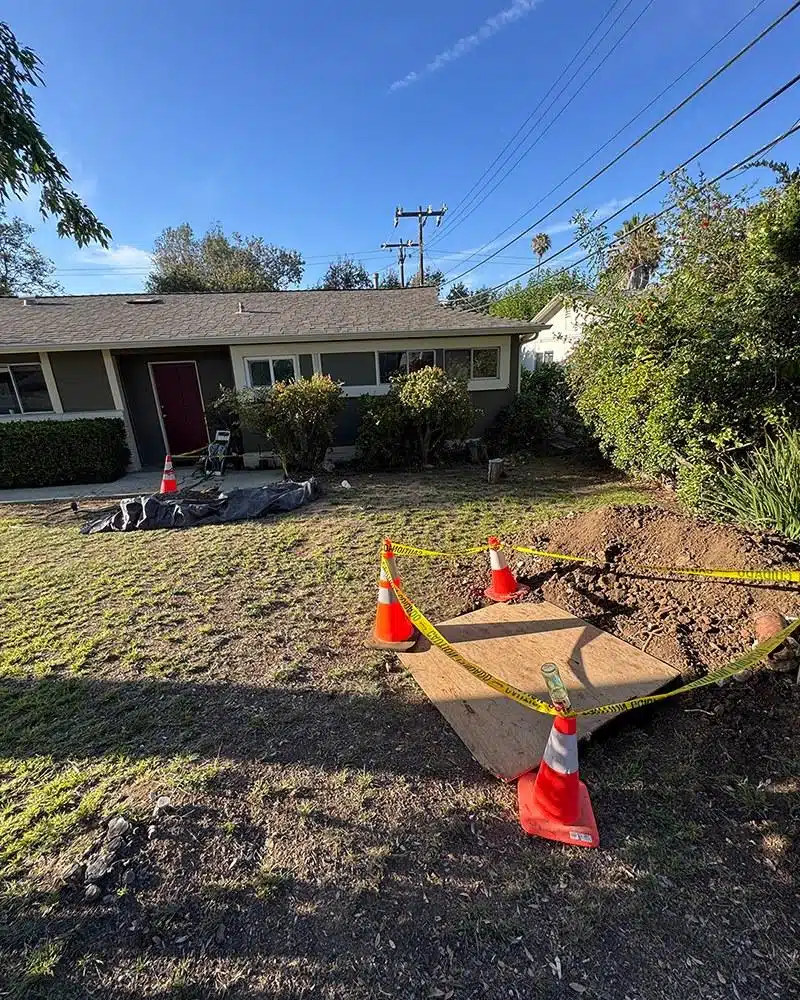
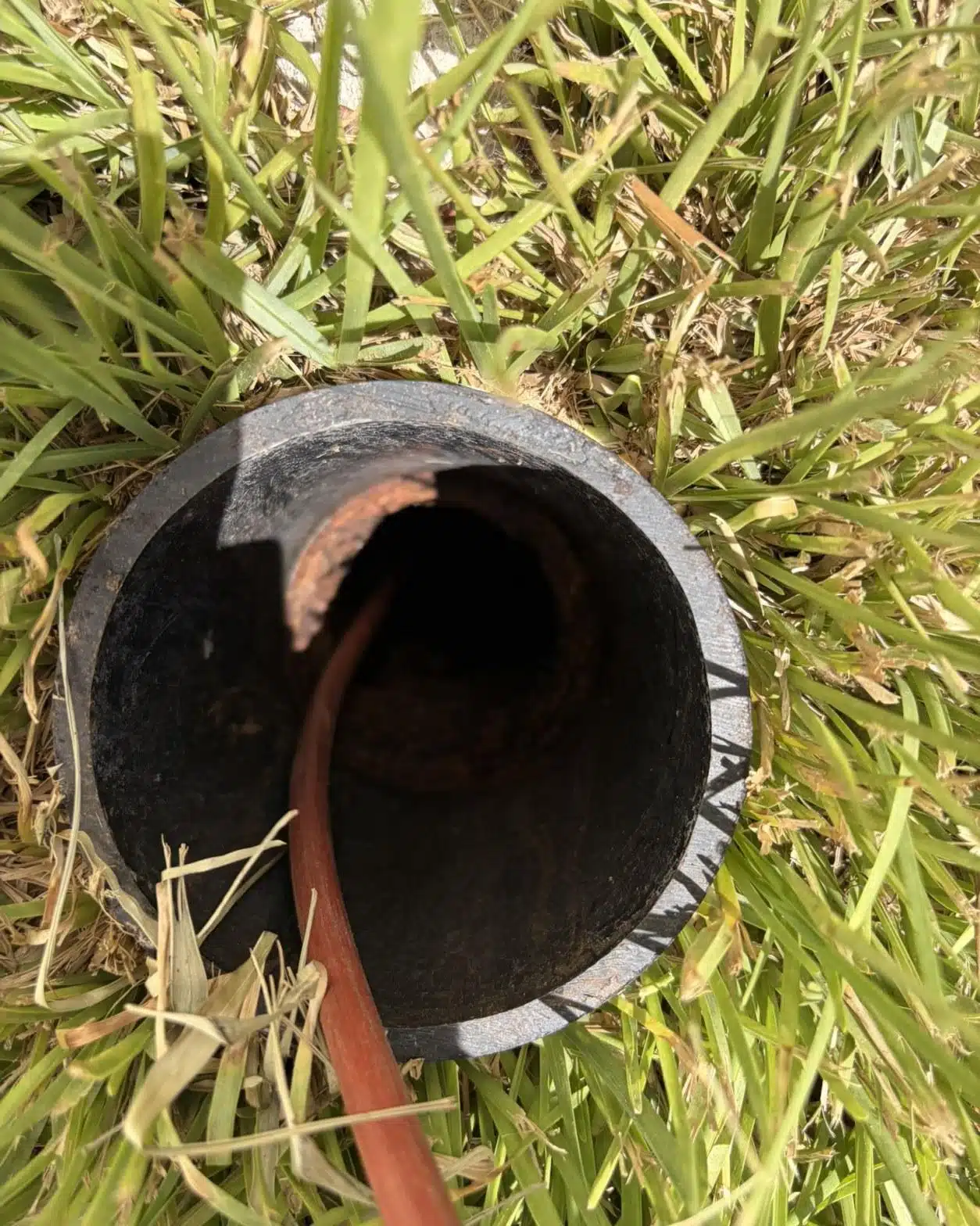
The existing lateral was buried roughly 3 to 4 feet below grade, with the pipe running beneath a grass lawn between the home’s foundation and the public sidewalk. Years of soil movement, root intrusion, and the natural aging of older pipe material had compromised the line’s structural integrity. Los Angeles has an older housing stock, and many of its sewer laterals date to the mid-twentieth century, when clay or cast-iron pipe was standard. Clay laterals typically have a service life of 50 to 100 years depending on soil conditions and root activity; the pipe on this property had clearly reached its limit.
The crew identified two excavation points: one near the home’s cleanout at the property line and a second access pit further toward the street. Opening two targeted pits rather than trenching the entire run kept surface disruption to a minimum while still giving technicians full working access to both ends of the replacement section.
How Was the Excavation Carried Out?
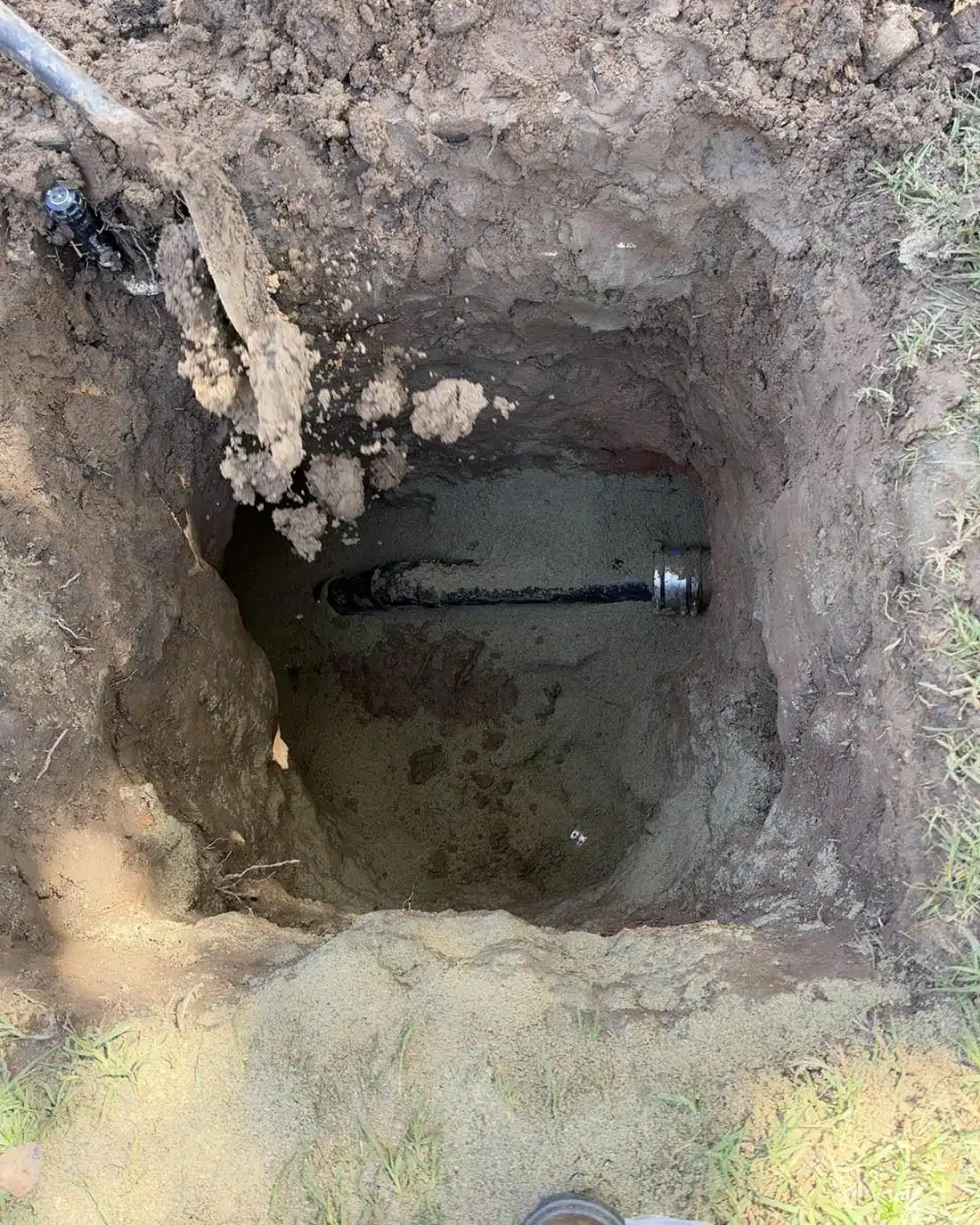
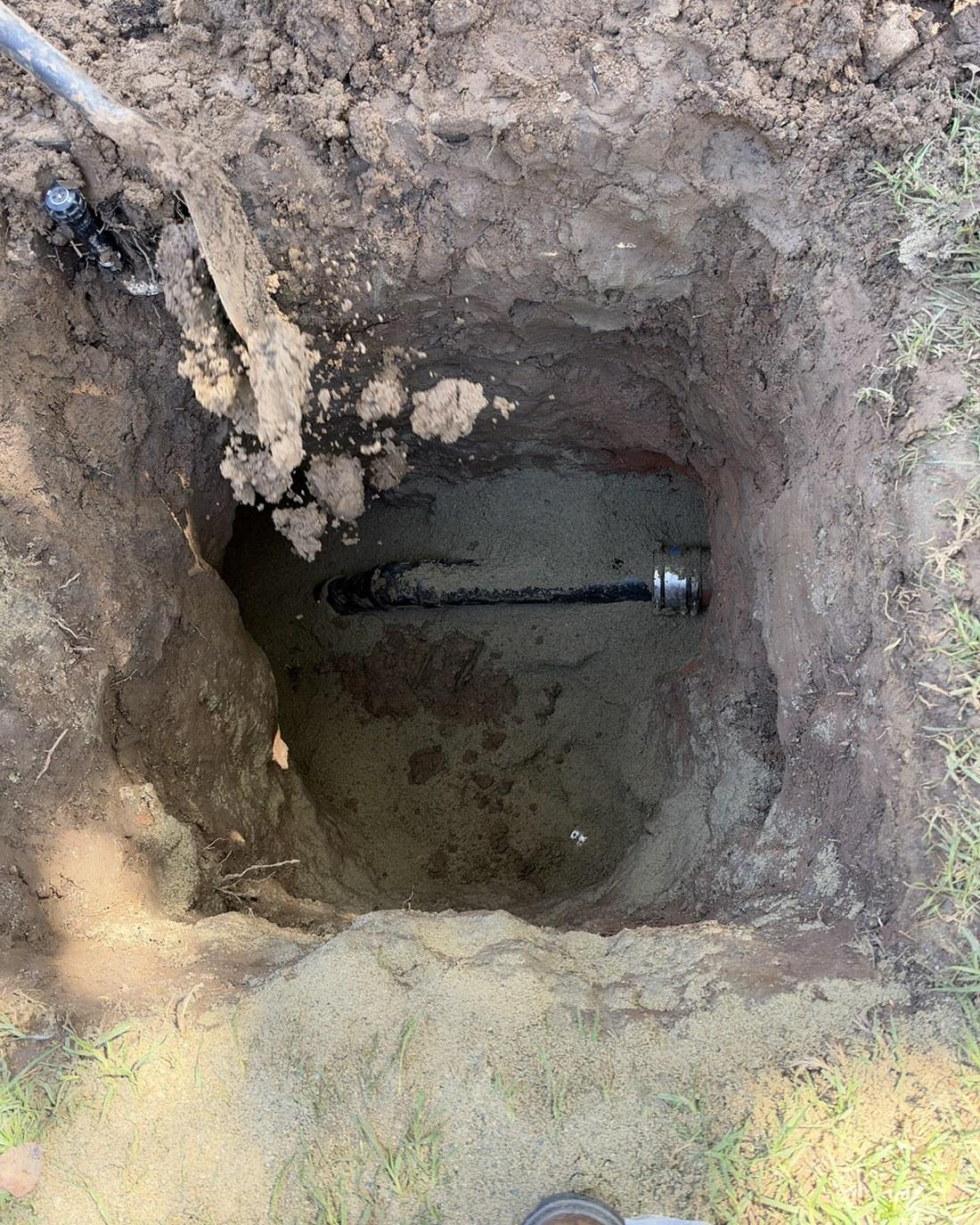
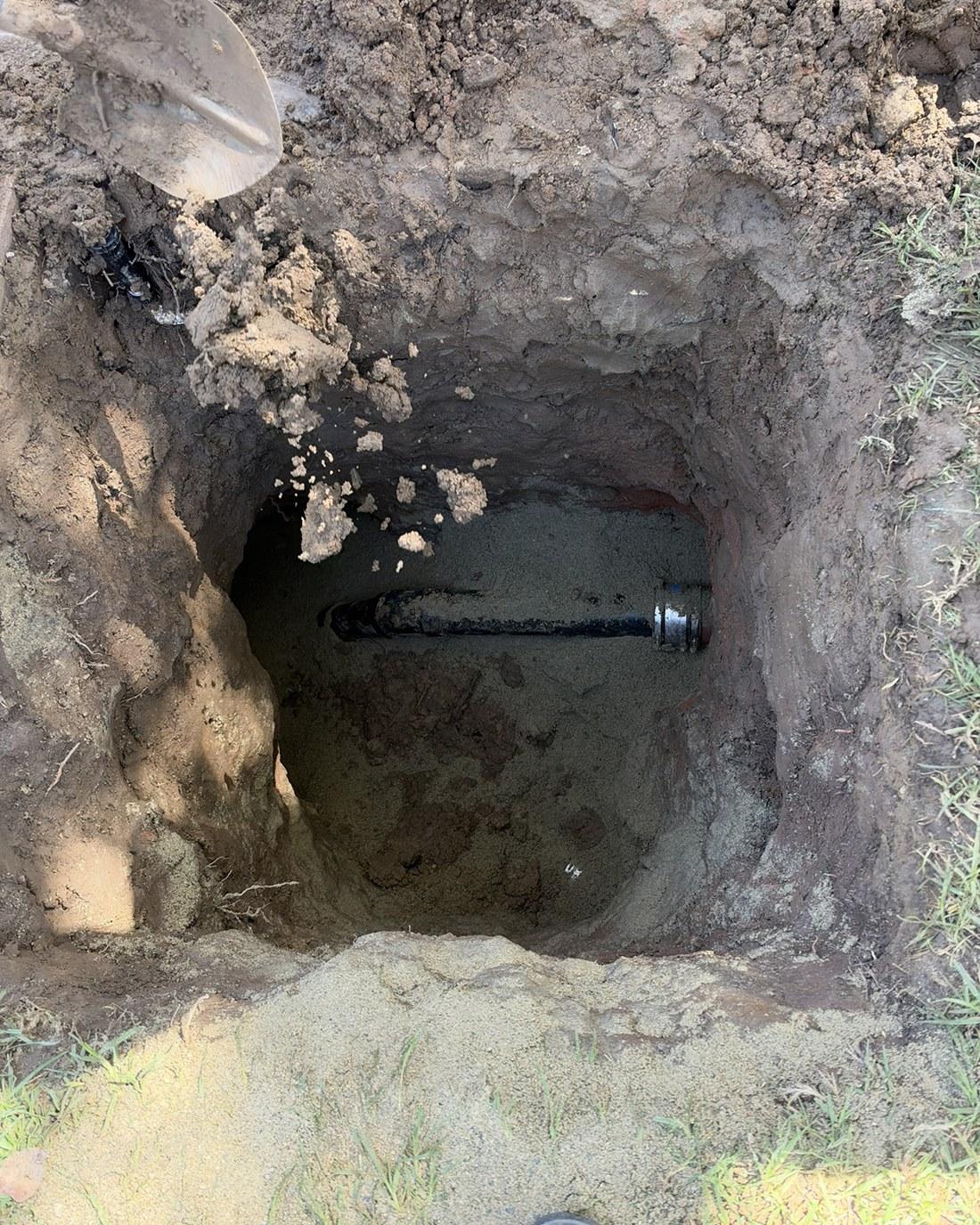
Both pits were hand-dug to approximately 4 feet deep, exposing the existing lateral and leaving enough clearance on all four sides to work safely around the pipe. The soil in this part of Los Angeles is a mix of clay and sandy loam, which holds its shape reasonably well during a shallow excavation but still requires care to avoid a wall collapse. Each pit measured roughly 3 feet wide by 3 feet long, sized to give a technician room to cut, couple, and backfill without working in a dangerously confined space.
Once the old pipe was exposed at both locations, the crew confirmed the depth, photographed the condition of the existing line, and planned the coupling points. Sand was brought in to bed the new pipe correctly: proper pipe bedding prevents point-loading that can crack PVC over time, and it is a required step under most California municipal plumbing codes.
What Materials Were Used for the New Sewer Lateral?
The replacement pipe is Schedule 40 PVC, the current residential standard for sewer laterals, joined at each excavation point with stainless-steel band couplings. PVC is the material called for by the California Plumbing Code (Title 24, Part 5) for underground drain, waste, and vent applications in residential construction. It is chemically resistant, smooth-walled for low friction, and rated for continuous underground service without corrosion.
The stainless-steel band couplings visible in the featured photo are a no-hub style fitting, sometimes called a Fernco-type coupling, with a neoprene gasket sleeve and two stainless clamp bands per fitting. This style of coupling is approved for underground use and allows the new PVC sections to connect cleanly to the existing piping on each side of the replacement zone without requiring solvent cement at the transition point. Each coupling was torqued to the manufacturer’s specification to seat the gasket evenly and prevent any gap that could allow soil infiltration or leakage.
Our technicians have observed that stainless band couplings on sewer laterals in Los Angeles clay soils show far less corrosion after 10 or more years than galvanized alternatives, which is why we specify stainless hardware on every underground repair in this region.
How Long Did the Job Take, and What Was the Outcome?
The full replacement, from first shovel to backfill, was completed within a single working day. Once both pits were open and the pipe condition confirmed, the actual pipe swap took approximately 2 to 3 hours. Backfilling was done in compacted lifts, with sand placed around the pipe for the first 6 inches above the crown, then native soil used to bring the pits back to grade.
As of 2025, the Los Angeles Bureau of Sanitation requires that any work connecting to the city sewer main be permitted and inspected. This job was permitted accordingly, and the new lateral passed inspection before the trench was closed. The homeowner’s drains returned to full, unrestricted flow and the sewage odor at grade disappeared completely.
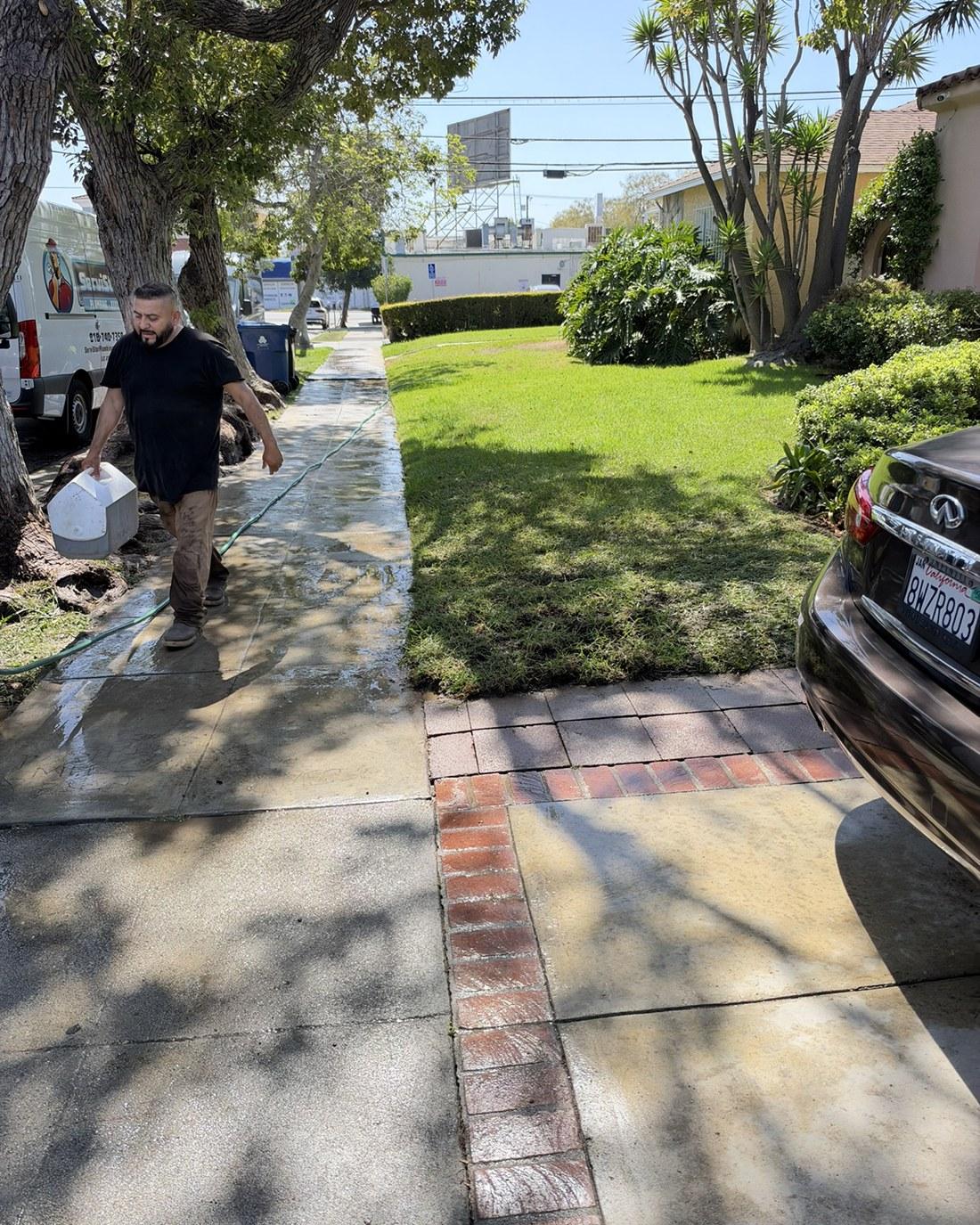
The crew finished by hosing down the sidewalk and driveway to clear any spoil tracked out during excavation, leaving the site clean before departing. The lawn above the repair area will settle and re-establish within one growing season as the backfill compacts naturally.
Ready to Replace Your Sewer Lateral in Los Angeles?
If your drains are slow, you smell sewage near the yard, or a camera inspection has already flagged pipe damage, a lateral replacement is likely the most cost-effective long-term solution. Repairs that patch a failing line typically cost less upfront but often fail again within 2 to 5 years on pipe that is structurally compromised. A full replacement with properly bedded PVC can be expected to last 50 years or more.
Call ServiStar to schedule an on-site assessment. We serve residential properties throughout Los Angeles and surrounding communities. A technician will review your camera footage or run a new inspection, walk you through the scope of work, and provide a written estimate before any excavation begins.
Gallery
Frequently Asked Questions
How do I know if my sewer line needs to be replaced instead of just cleaned?
A camera inspection is the definitive way to tell. If the footage shows cracks, collapsed sections, root intrusion that has deformed the pipe wall, or corrosion that has reduced the pipe's interior diameter by more than 25 percent, cleaning will not restore reliable flow and replacement is the right call. Recurring blockages every 6 to 12 months despite regular hydro-jetting are also a strong indicator that the pipe itself has failed.
How long does a sewer line replacement usually take?
A standard residential lateral replacement in Los Angeles typically takes one full working day from excavation to backfill. Longer runs, difficult soil conditions, or pipe located beneath concrete flatwork can extend the job to two days. The pipe itself is connected and ready for flow within a few hours once the trench is open.
What kind of pipe is used for a sewer line replacement in California?
Schedule 40 PVC is the current standard for residential sewer laterals under the California Plumbing Code, which is Part 5 of Title 24. It is smooth-walled, chemically resistant, and rated for continuous underground service. At transition points where new PVC meets existing pipe, stainless-steel band couplings with neoprene gaskets are used to create a watertight, soil-tight connection.
Do I need a permit to replace a sewer line in Los Angeles?
Yes. The Los Angeles Bureau of Sanitation requires a permit for any work that connects to the city sewer main, including sewer lateral replacements. The new line must pass a pressure or flow inspection before the trench is closed. Working without a permit can result in fines and a requirement to re-excavate for inspection after the fact.
How deep is a residential sewer line buried in Los Angeles?
Most residential sewer laterals in Los Angeles are buried between 2 and 5 feet below grade, with 3 to 4 feet being typical for properties built in the mid-twentieth century. Depth varies based on the elevation of the city main, the distance from the house to the street, and how the original contractor graded the line for proper slope.
How long will a new PVC sewer line last?
A properly installed Schedule 40 PVC sewer lateral with correct pipe bedding can be expected to last 50 years or more under normal residential use. The main threats to PVC laterals are aggressive tree root intrusion from nearby large trees and physical damage from soil settlement or construction activity nearby. Annual inspections can catch early intrusion before it causes a full failure.