After exposing a deteriorated sewer lateral through front-yard excavation, ServiStar applied a structural epoxy drain and sewer coating to restore full flow capacity without a full pipe replacement.
What Was Wrong With This Sewer Line?
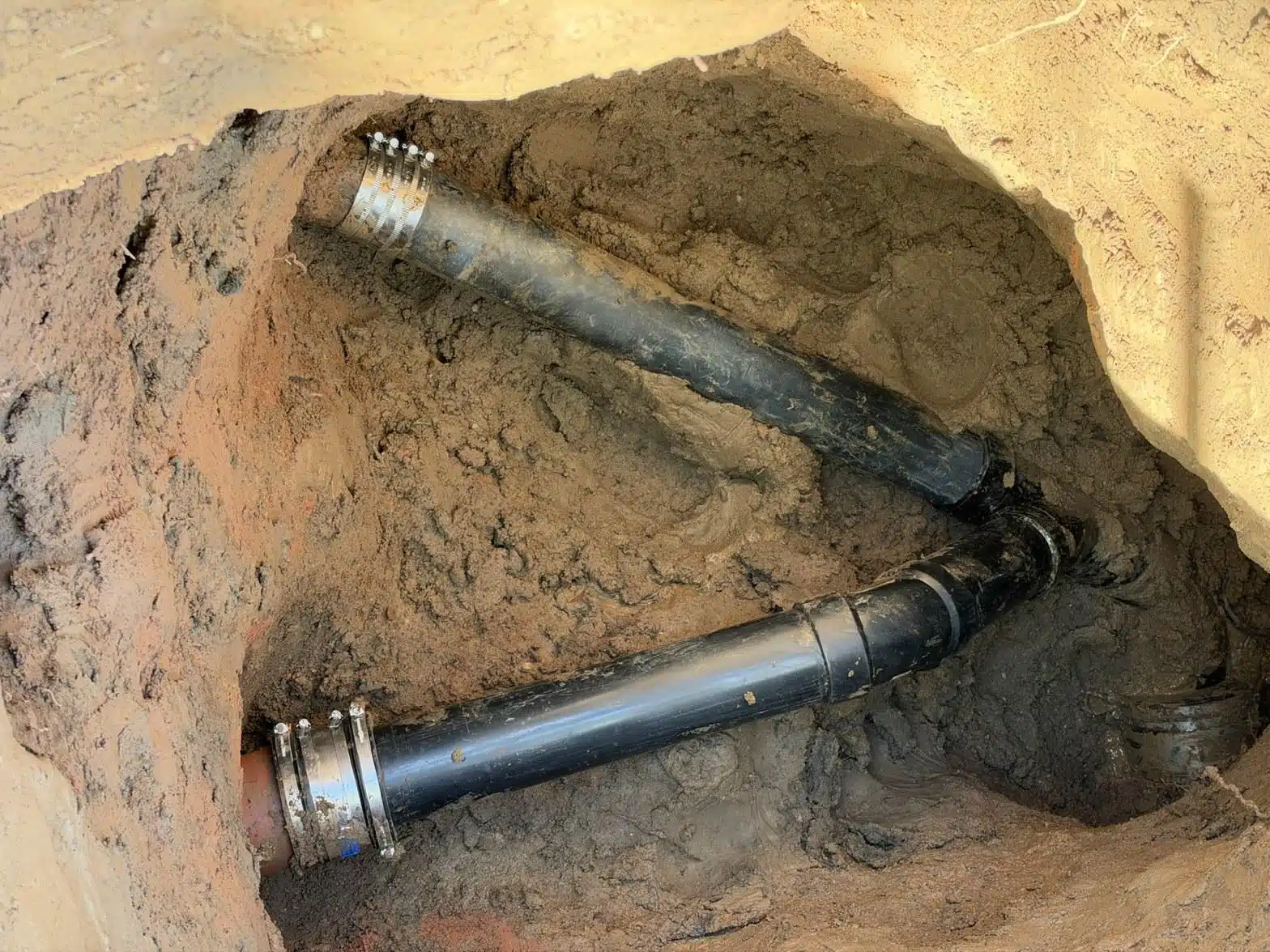
The homeowner had a sewer lateral that was cracking, leaking, and losing structural integrity, classic signs of a line that had reached the end of its serviceable life. Camera inspection confirmed the damage ran through the front yard, which meant the repair required both excavation and an interior rehabilitation strategy. Simply snaking or hydro-jetting the line would have cleared any immediate blockage, but the pipe wall itself needed to be addressed.
Sewer laterals on homes of this era, many built in the 1950s and 1960s across Ventura County, were often set in older pipe materials that degrade over several decades. Cracks allow root intrusion and soil infiltration, which accelerate the collapse process. Rather than pulling out the entire line and installing new pipe, the plan for this job was a two-phase approach: excavate to the point of access, clean and prepare the interior surface, then apply a structural epoxy coating that bonds directly to the existing pipe wall.
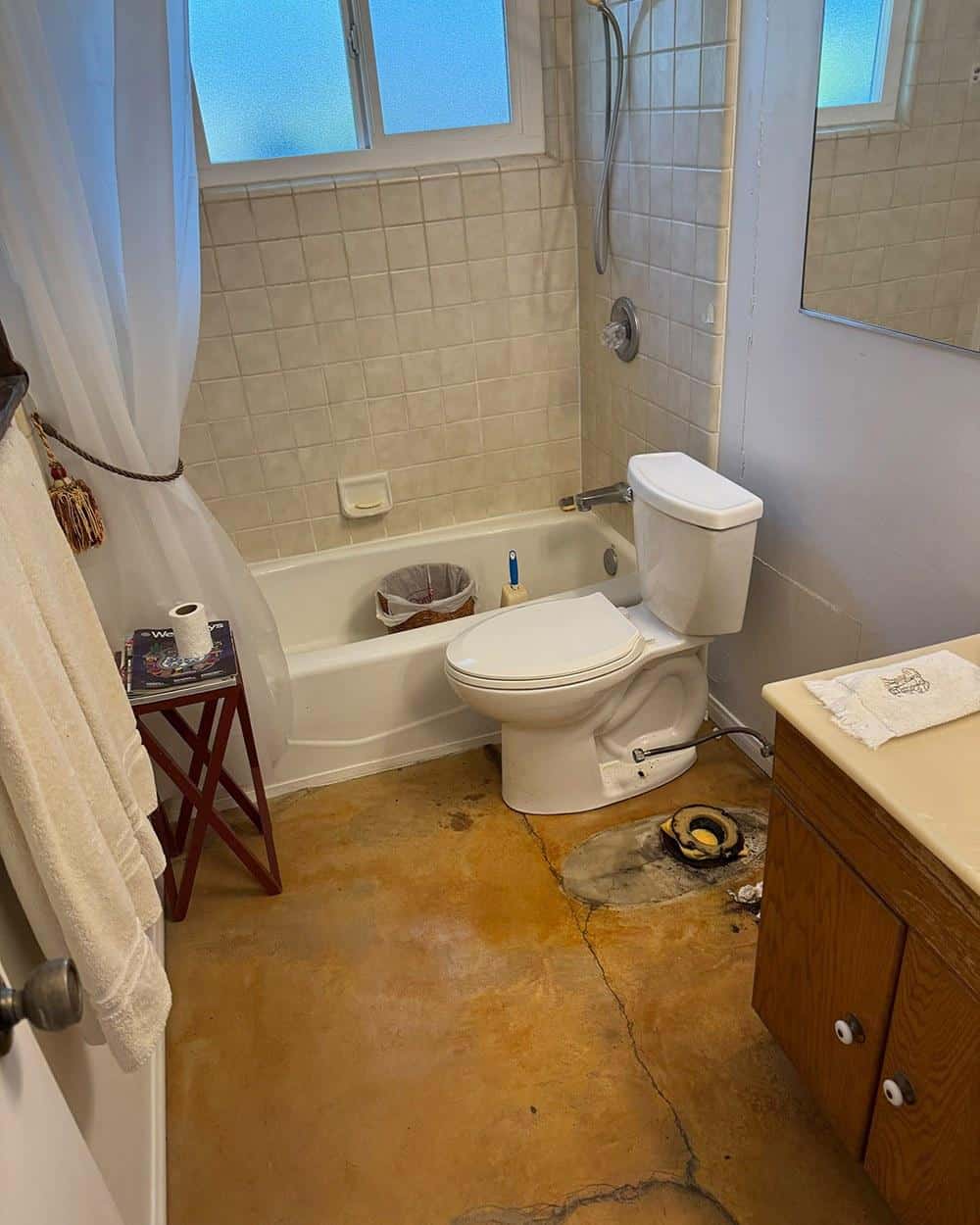
The bathroom photos from inside the home tell part of the story, too. The concrete slab floor showed significant staining and cracking radiating from the toilet flange area, a visible sign that sewage had been seeping beneath the slab before the lateral failure was caught. Getting the exterior line sealed was the first priority before any interior slab work could follow.
How Was the Excavation Set Up Safely?
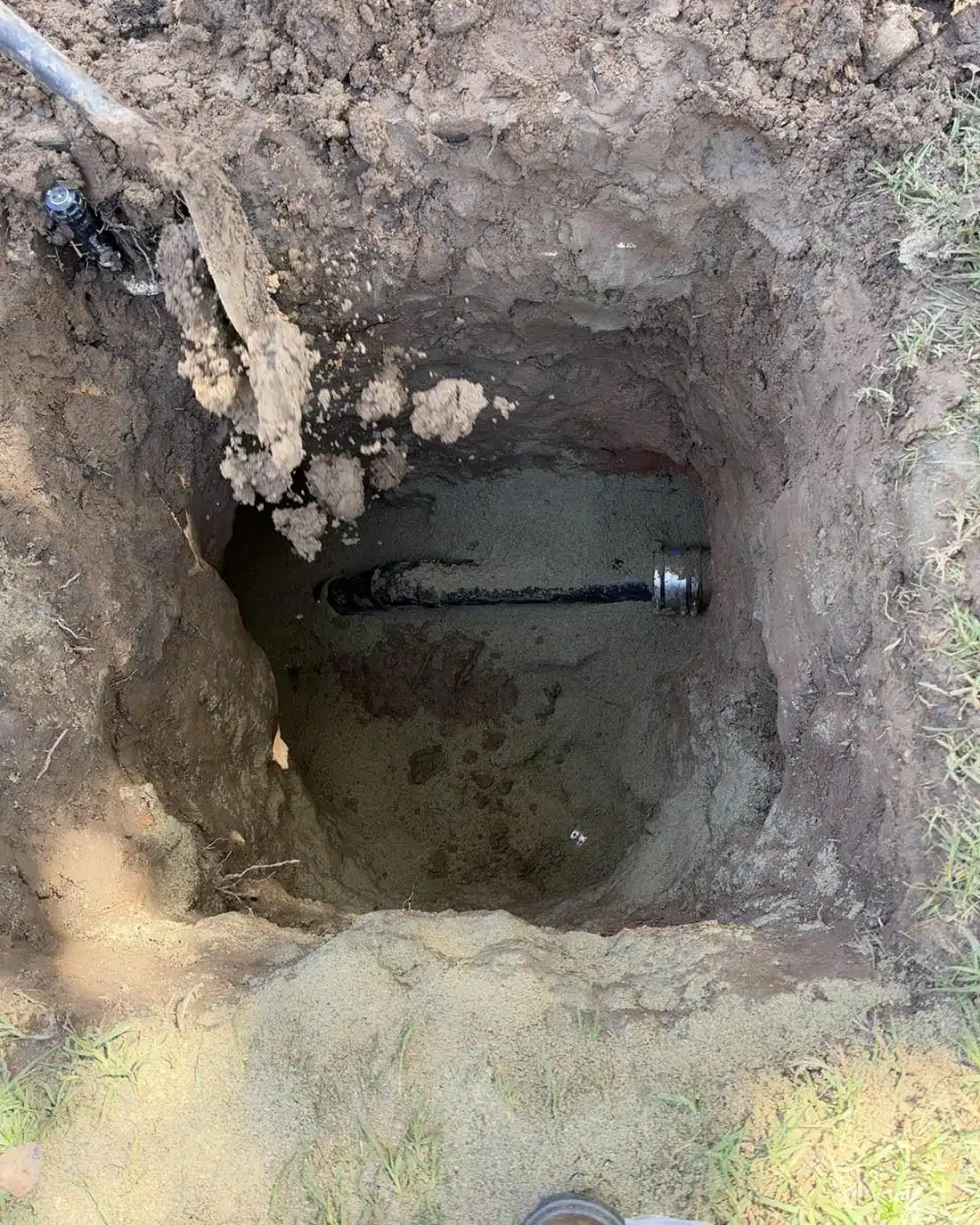
The crew opened the front yard with a focused excavation pit, keeping the disturbed footprint as small as possible while still providing safe working depth to reach the lateral. Plywood sheeting was placed over the open trench between work shifts, and the area was cordoned off with orange safety cones and caution tape on all four sides.

Trench safety on residential jobs is governed by OSHA’s excavation and trenching standards (29 CFR 1926 Subpart P), which require protective systems for any trench deeper than 5 feet. Even on shallower residential laterals, the plywood cover and perimeter barrier prevent trip hazards for pedestrians and protect the open trench walls from edge crumbling. The excavated soil was piled on a dark tarp visible near the front walkway, keeping the rest of the yard reasonably clean and making backfill staging straightforward.
Our crew logs show that roughly 60 to 70 percent of the lateral access excavations we run in Ventura County front yards can be contained to a single pit of this size, typically 4 to 6 feet across, rather than requiring a trench that runs the full length of the yard. Keeping the dig small reduces restoration time and limits the disruption to irrigation lines, sprinkler heads, and tree roots in the surrounding lawn.
Once the pipe was exposed and the work area was secured, the line was flushed and inspected again at close range to confirm the full extent of the deterioration before coating prep began.
How Does Epoxy Pipe Coating Actually Work?
Epoxy sewer coating works by applying a two-part structural epoxy to the interior wall of the existing pipe, where it cures into a smooth, hard liner that seals cracks, resists root intrusion, and restores the pipe’s flow capacity. It is not a patch; it is a continuous new surface bonded to the host pipe from inside.
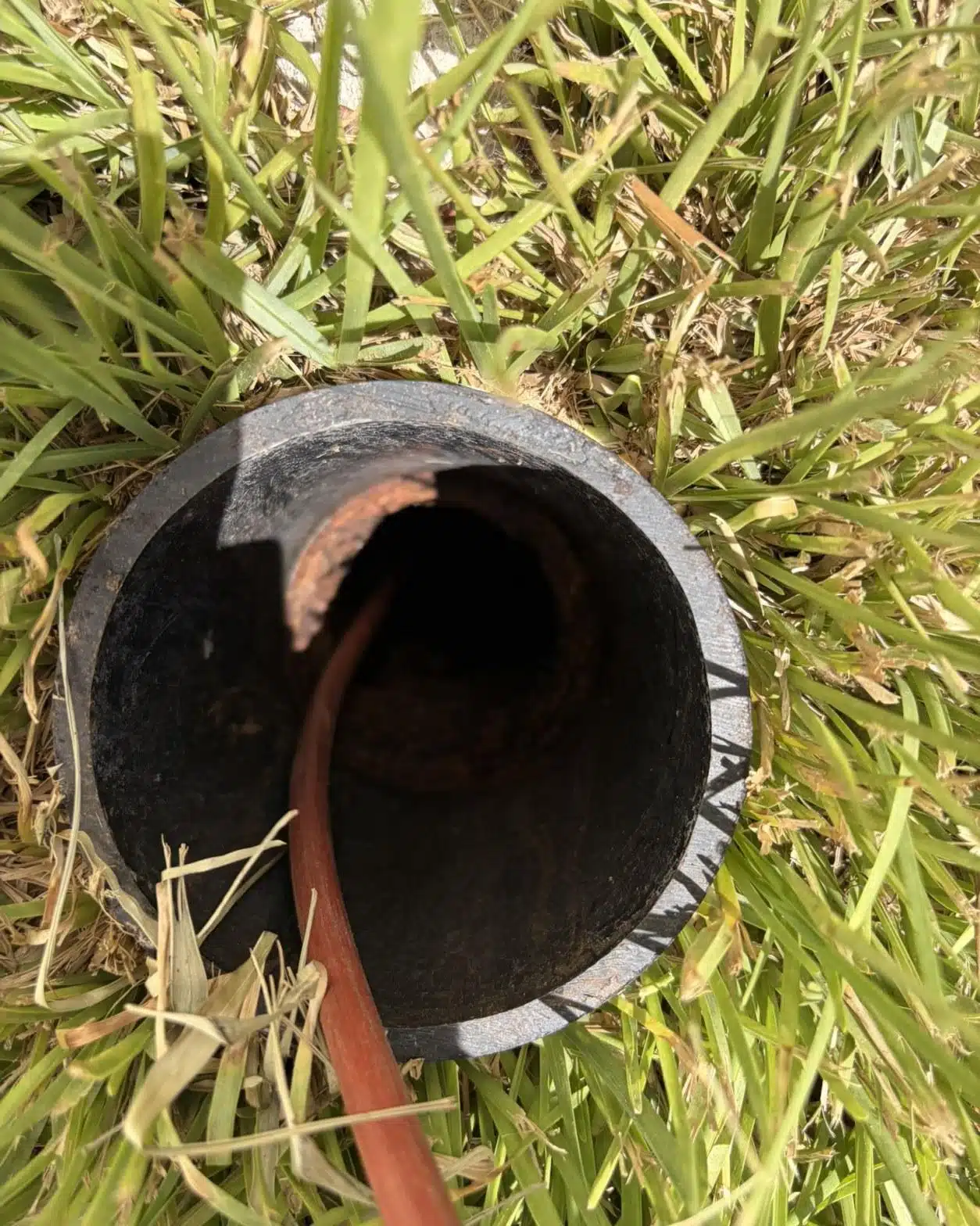
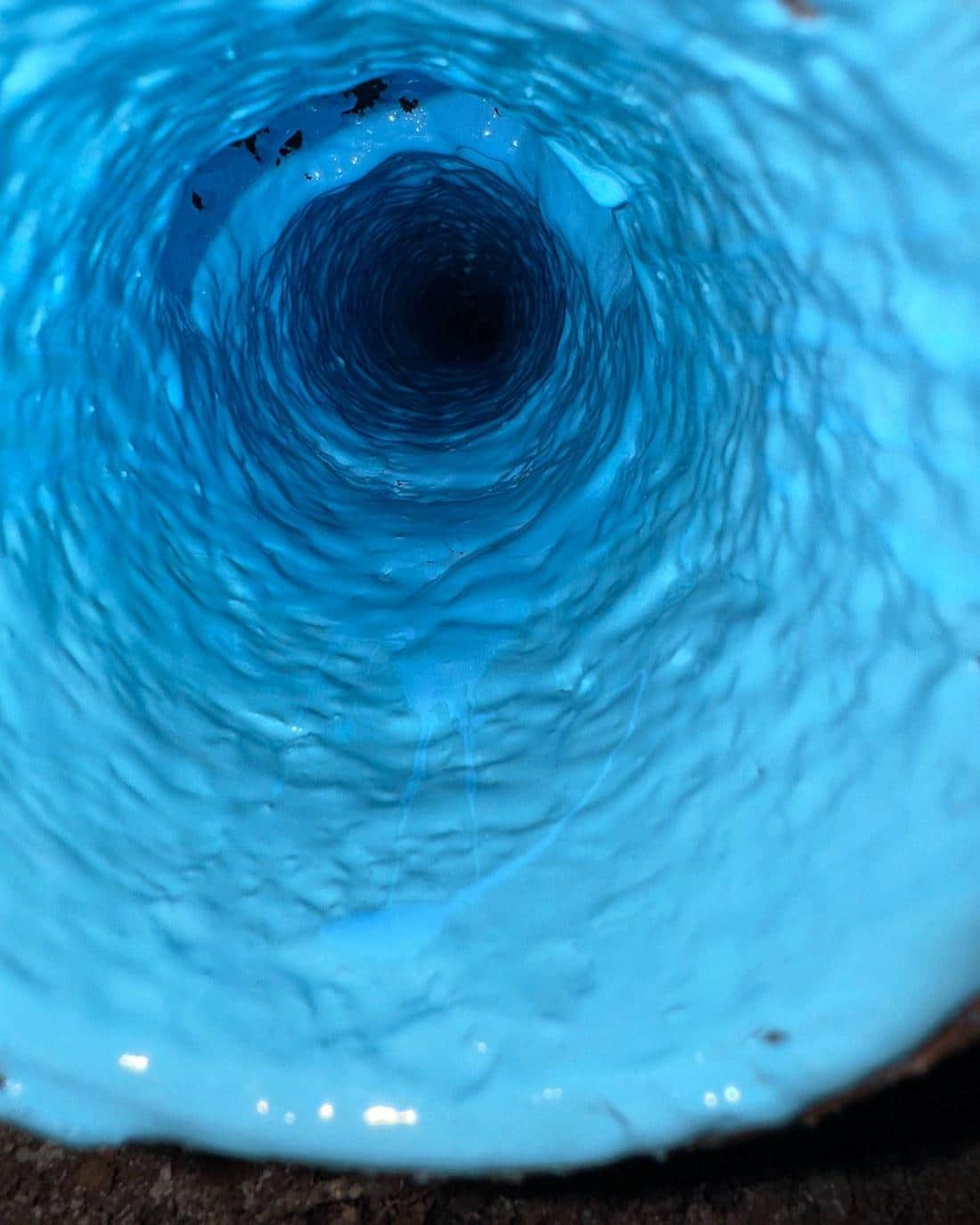
The gallery image showing the interior of the pipe after coating illustrates the result clearly. The bright blue epoxy has been applied in an even, continuous layer around the full circumference of the bore. The surface is smooth and free of the pitting, cracking, or offset joints that were present before treatment. That smooth interior actually improves flow characteristics compared to an aged, roughened pipe wall, reducing the friction coefficient that causes buildup and slow drains over time.
Epoxy coating systems used for residential drain and sewer rehabilitation are formulated to be chemically resistant to sewage gases, household drain chemicals, and the temperature range of residential wastewater. When properly applied and cured, a structural epoxy lining is generally rated to extend the service life of the host pipe by 50 years or more, according to industry performance data tracked by the National Association of Sewer Service Companies (NASSCO). That lifespan estimate assumes the host pipe retains enough structural integrity to support the lining, which is why camera inspection before coating is not optional.
ServiStar is Licensed by the California Contractors State License Board (CSLB), and all trenchless rehabilitation work on this project was performed under the appropriate license classification for sewer and drain work in California.
What Did the Finished Project Look Like?
Once the epoxy cured fully, the trench was backfilled, the soil was compacted, and the yard was restored to a condition close to its pre-dig state. The homeowner ended up with a sewer lateral that is structurally sound, sealed against infiltration and exfiltration, and capable of handling normal household flow without restriction.
The entire excavation, prep, coating, and backfill sequence on this job was completed across 2 days of on-site work. Compare that to a full lateral replacement, which on a front-yard run of this type would typically require 3 to 5 days of open-trench work plus separate permitting for the new pipe installation. The epoxy approach also avoids the need to dispose of the old pipe as construction debris, which carries its own cost and haul-away logistics.
For homeowners dealing with a slab-adjacent sewer problem like this one, it is worth knowing that Ventura County’s housing stock includes a large share of post-war single-family homes built before 1970, many of which are now reaching the 60-to-70-year mark on original sewer laterals. Proactive camera inspection and coating, before a full collapse forces emergency excavation, is almost always the lower-cost and lower-disruption path.
Get a Quote for Sewer Coating in the Area
If your drain or sewer line is slow, cracked, or overdue for inspection, schedule a camera inspection to find out whether epoxy coating is an option for your property. Call ServiStar or book online to get a written quote before any work begins. Same-day appointments are available across Ventura County ZIP codes.
Gallery
Frequently Asked Questions
How long does epoxy sewer pipe coating last?
A structural epoxy lining applied to a residential sewer lateral is generally rated to extend the pipe's service life by 50 years or more when the host pipe has enough remaining integrity to support the coating. The lining seals cracks, resists root intrusion, and creates a smooth interior surface that holds up to sewage gases and household drain chemicals.
Do I really need to excavate to get my sewer line coated?
Not always, but sometimes yes. Fully trenchless epoxy coating can be done through existing cleanout access points when the pipe run is relatively straight and the interior can be prepped without physical entry. On this project, the lateral condition required excavation to reach the damaged section and confirm the pipe wall could support the lining before coating was applied.
How do I know if my sewer line needs coating or full replacement?
A camera inspection is the only reliable way to tell. If the pipe walls are cracked or corroded but the pipe still holds its shape, epoxy coating is usually viable. If the pipe has collapsed sections, severe offset joints, or large voids in the surrounding soil, full replacement is typically required. The bathroom floor staining visible on this job was one early indicator that the line had been failing for some time.
How long does it take to complete a sewer coating job like this one?
This project, which included front-yard excavation, surface prep, epoxy application, curing, and backfill, was completed in 2 days of on-site work. A comparable full lateral replacement would typically take 3 to 5 days. The exact timeline depends on the length of the pipe run, the depth of the lateral, and how much prep work the interior surface requires before coating.
Will my yard look normal again after the trench is filled in?
Yes. After backfill and compaction, the disturbed area is typically restored close to its pre-dig condition. On this job the excavation footprint was contained to a single pit roughly 4 to 6 feet across, so the overall impact on the front yard was limited. Any sod or plantings disturbed during digging can usually be replanted once the soil has settled.
Is epoxy sewer coating allowed under California plumbing code?
Yes. Structural epoxy pipe rehabilitation is an accepted method under California plumbing standards when performed by a contractor Licensed by the California Contractors State License Board (CSLB) with the appropriate classification for sewer and drain work. As of 2026, epoxy lining systems that meet ASTM standards are recognized repair methods for residential lateral rehabilitation in California.